UCSP Module Grade 12: What It Covers, Where to Get the Modules, and What Changed in 2026
A Grade 12 student messaged her teacher one Sunday night: “Ma’am, saan po makakahanap ng UCSP module?” She had a quiz on Monday, no module in her bag, and a phone full of random PDFs she did not trust. If you have typed the same question into Google, this guide is for you.
UCSP module Grade 12 means the learning modules for Understanding Culture, Society and Politics, the senior high subject that mixes anthropology, sociology, and political science into one course. This guide explains what the subject actually covers, lists the modules in order, tells you where the official DepEd copies live, and clears up the big 2026 question: is UCSP still a subject at all?
What Is UCSP, Really?
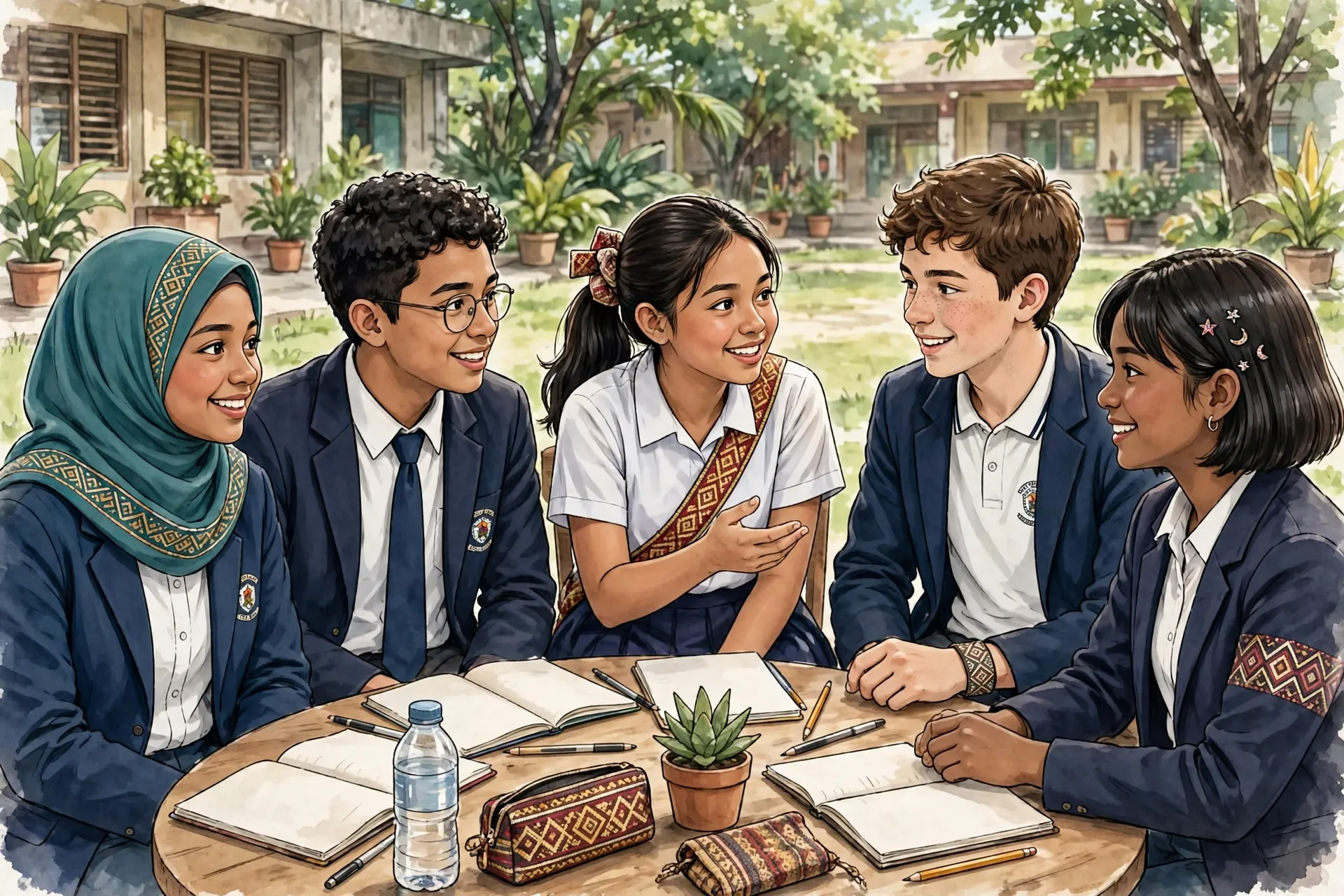
UCSP stands for Understanding Culture, Society and Politics. Under the 2016 senior high curriculum, it was a core subject — meaning every SHS student took it, whatever their track. Not just HUMSS. STEM, ABM, TVL, everyone. It ran for 80 hours in one semester, in Grade 11 or Grade 12, depending on how the school scheduled it.
The curriculum guide, published in December 2013, describes the course in one long sentence. Stripped down, it says this: UCSP uses ideas from anthropology, political science, and sociology to build awareness of cultural, social, and political life, sensitivity to cultural differences, and an understanding of how culture, human agency, society, and politics actually work. It also pushes students to look at the country’s current human development goals with clear eyes.
Three disciplines, one subject. That is the part students usually miss. Anthropology asks how culture shapes people. Sociology asks how society organizes people. Political science asks who holds power and how decisions get made. UCSP keeps all three in the same room, because real life does not separate them either. A fiesta is culture, but it is also an economy, a barangay decision, and a family reunion all at once.
One small naming quirk is worth knowing. The curriculum guide calls the subject “Understanding Culture, Society and Politics.” DepEd Order No. 21, s. 2019, which lists the 15 old core subjects and their hours, calls the same subject “Understanding Culture, Politics, and Society.” Same subject, different word order. If your module cover uses one version and your teacher uses the other, do not worry — and if you are checking a module’s authenticity, look for the competency codes starting with UCSP11/12. That prefix is the giveaway that you are holding the real thing.
The 2026 Update: Is UCSP Still a Subject?
Short answer: for Grade 12 students in school year 2026–2027, yes. For new Grade 11 students, no — and that split is exactly why search results look confusing right now.
DepEd Order No. 017, s. 2026, the Strengthened Senior High School Curriculum, cut the old 15 core subjects down to five: Effective Communication and Mabisang Komunikasyon, General Mathematics, General Science, Life and Career Skills, and Pag-aaral ng Kasaysayan at Lipunang Pilipino. Each runs 160 hours across the whole of Grade 11. UCSP is not one of the five, and it does not sit in the new elective clusters either. Our SHS curriculum guide walks through the old strands versus the new setup in full.
But here is the part that matters for you. The strengthened curriculum started with Grade 11 in SY 2026–2027. Grade 12 learners in SY 2026–2027 continue on the existing SHS curriculum — DepEd said so in its February 2026 memorandum, and news coverage confirmed it when full implementation was announced. So if you are in Grade 12 this school year, UCSP is still on your class program, your teacher still grades it, and the modules below are still the ones to study. If you are in Grade 11 under the new curriculum, you will meet UCSP’s ideas inside the new core subjects and electives instead, especially Pag-aaral ng Kasaysayan at Lipunang Pilipino and the Social Sciences and Humanities cluster — the same path our HUMSS strand courses guide describes for students heading toward people-centered college courses.
UCSP Module Grade 12: The Topics in Order
UCSP is taught as one semester, but most schools split it into two quarters of modules. The exact module numbers on your school’s copies may differ — DepEd’s self-learning modules were written by different regional offices, so a “Module 3” in one division is not always the same “Module 3” in another. What stays the same everywhere is the topic order from the curriculum guide. Learn that order and you can place any module you are handed.
| Module | Topic | What you actually study |
|---|---|---|
| 1 | Starting points for understanding culture, society, and politics | Human cultural variation, social differences, political identities, and how fast culture changes |
| 2–3 | Defining culture and society | Culture and society through anthropology and sociology: what culture is, its elements, and how it changes |
| 4–5 | Becoming a member of society | Socialization, identity, and how a person learns the norms of a group |
| 6–7 | How society is organized | Social groups, organizations, and networks — primary and secondary groups, in-groups and out-groups |
| 8–9 | Cultural, social, and political institutions | Kinship and marriage, political and leadership structures, education, religion, and health |
| 10 | Social and political stratification | Who gets what, and why: class, status, power, and inequality in Philippine society |
| 11 | Responding to social, political, and cultural change | How societies adapt — and resist — when change arrives, including new technology |
A few of these topics show up in the DepEd self-learning modules under names students search for directly. The Quarter 2 module on the functions and importance of education sits inside the institutions block: it asks what education does for a person and for society, and why those two answers sometimes pull in opposite directions. The Quarter 2 module on emerging challenges in contemporary societies sits at the end of the course, where globalization, migration, and digital life land. And DepEd’s learning portal carries a UCSP module on digital technology and the web, which treats the internet as a question of power and freedom — who gets heard, who gets watched, who decides.
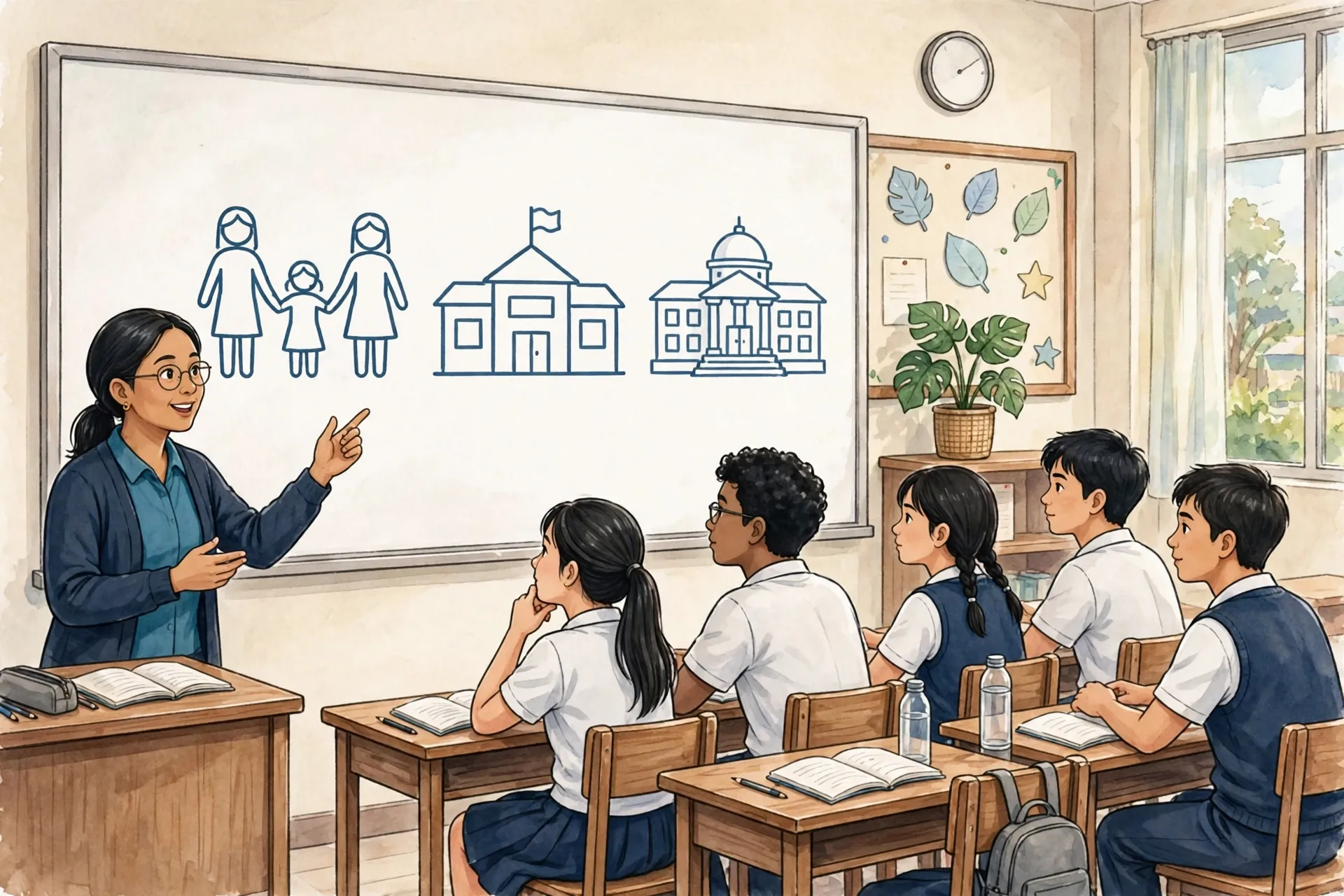
Notice how the course climbs. It starts with definitions, moves to the person joining society, then to groups, then to the big institutions, then to inequality, then to change. Exam questions follow the same climb. Early-quarter tests ask “what is culture?” Later ones ask “why does this community accept one change and fight another?” If you study in that order, the later questions feel like the natural next step instead of a surprise.
Where to Get Official UCSP Modules
The safest copies come from three places, in this order.
First, your teacher. Schools receive the module sets for their classes, and your teacher’s copy matches the numbering your quizzes will use. If your school hands out printed modules, that stack is your main source. Ask for it before hunting online.
Second, DepEd’s Learning Resource Management and Development System (LRMDS) portal, the department’s official repository, where UCSP modules are listed for Grades 11 and 12 with their objectives and topics. Search the portal for “Understanding Culture, Society and Politics” rather than just “UCSP” — the full title returns cleaner results.
Third, the Alternative Delivery Mode self-learning modules (SLMs) DepEd published in 2020, written against the Most Essential Learning Competencies (MELCs) during distance learning. These are the PDFs that circulate most widely: Quarter 1 and Quarter 2 sets from regional offices, each module built the same way — What I Know, What’s New, What Is It, What’s More, What I Have Learned, What I Can Do, and an assessment at the end. They are still solid review material, even now that classes are face to face again.
One warning, from experience: not every PDF labeled “UCSP module” online is a DepEd module. Before you trust one, check three things. The competency code should start with UCSP11/12. The content should follow the topic order in the table above. And the source should be a DepEd office, a DepEd portal, or your school — not a random upload with no author. A module that skips from culture straight to stratification, or one that reads like a blog post with no activities, is probably someone’s notes dressed up as a module. Notes can still help you review. Just do not cite them as the official module.
UCSP Module Finder (Tool)
Not sure which part of the course you need to review? Pick the topic area below and the finder will tell you what to focus on and give you one practice question to try.
Pick a topic area:
How UCSP Is Graded
UCSP follows the same grading rules as other senior high core subjects under DepEd Order No. 8, s. 2015: Written Works count 25%, Performance Tasks 45%, and the Quarterly Assessment 30% of the quarter grade. That split explains a lot about how to spend your study time. The quarterly test matters, but it is less than a third of the grade. The performance tasks — nearly half — are where UCSP is usually won or lost.
In practice, written works are the quizzes, seatwork, and short essays. Performance tasks are the ones that look like real life: a short observation report on your own barangay, a group presentation comparing two cultures’ practices, an interview with a local official about how a decision was made. The quarterly assessment is the written exam covering the quarter’s modules. Our MATATAG grading guide explains the same computation step by step, with a worked example, if you want to check your own numbers.
Teachers notice one pattern every year. Students who only memorize definitions do fine on quizzes and then struggle on performance tasks, because UCSP tasks ask for judgment, not recall. “Is this practice fair?” is a different question from “What is stratification?” The students who do best are the ones who practice applying each concept to something they actually saw — a family rule, a school policy, a news story — before the task is due.
Study Tips That Actually Work for UCSP
- Anchor every concept to one real example. Do not just memorize “enculturation.” Write down where you first learned to say “po” and “opo,” and who taught you. That memory will survive longer than a definition.
- Study the course in its own order. Definitions first, then the person, then groups, then institutions, then inequality, then change. Jumping to stratification before you understand groups is like reading the last chapter first.
- Compare, don’t just list. When a module asks about two cultures or two institutions, make a two-column table. UCSP exam questions love comparisons, and a table is already half an essay outline.
- Use your barangay as a laboratory. The fiesta committee, the SK council, the sari-sari store’s suki system — each one is an institution, a group, and a power structure at the same time. One afternoon of observing beats one night of re-reading.
- Check your module’s code. If the code starts with UCSP11/12 and the topic matches the table above, you are studying the right material. If it does not, ask your teacher before you spend a night on it.
Frequently Asked Questions
What is UCSP in Grade 12?
Understanding Culture, Society and Politics — an 80-hour senior high core subject that combines anthropology, sociology, and political science. Schools schedule it in Grade 11 or Grade 12 under the 2016 curriculum.
Is UCSP still offered in SY 2026–2027?
For Grade 12, yes: Grade 12 learners in SY 2026–2027 continue the existing SHS curriculum, which includes UCSP. New Grade 11 learners follow the Strengthened SHS curriculum instead, whose five core subjects do not include UCSP.
Where can I download the official UCSP module?
Start with your teacher’s copy, then DepEd’s LRMDS portal (lrmds.deped.gov.ph), then the 2020 ADM self-learning modules written against the MELCs. Check that any copy you use carries a UCSP11/12 competency code.
How many modules does UCSP have?
The course content runs through eleven module blocks in the curriculum guide’s order, from starting points and defining culture, through socialization, groups, and institutions, to stratification and social change. Regional SLM sets number them differently, so follow the topic order, not just the module number.
What is the difference between UCSP and HUMSS?
UCSP is one subject. HUMSS was a whole strand — a track of many subjects for students interested in people and society. Every track took UCSP, not only HUMSS students.
Is UCSP hard?
It is reading-heavy and opinion-heavy rather than computation-heavy. Students who memorize definitions but never apply them usually find the performance tasks harder than the quizzes. Applying each concept to a real example from your own community is the fastest way to make it click.
Conclusion
A UCSP module Grade 12 set is not hard to find — the hard part is knowing which copy is official, which topic comes next, and whether the subject still applies to you. Now you know all three: Grade 12 in SY 2026–2027 still takes UCSP under the existing curriculum, the modules run from culture and society through institutions to stratification and change, and the official copies live with your teacher and on DepEd’s LRMDS portal. Start with the topic order in the table, use the finder above to pick your weak spot, and study with real examples from your own barangay. That is how UCSP stops being a pile of PDFs and starts making sense.
Download the free UCSP module checklist (PDF) — one page with the module order, the grading split, and a study tracker you can print.
For the full K to 10 and SHS picture, start at the MATATAG Curriculum homepage and pick the guide you need next.
Sources & References
- K to 12 Senior High School Core Curriculum — Understanding Culture, Society and Politics Curriculum Guide (December 2013): 80 hours per semester, Grade 11 or 12, course description and competency codes
- DepEd Order No. 21, s. 2019 — Policy Guidelines on the K to 12 Basic Education Program (15 core subjects, including UCSP as “Understanding Culture, Politics, and Society”)
- DepEd Order No. 017, s. 2026 — Strengthened Senior High School Curriculum (five core subjects for Grade 11, 160 hours each)
- DepEd Order No. 8, s. 2015 — Policy Guidelines on Classroom Assessment for the K to 12 Basic Education Program (SHS core grading weights)
- DepEd Learning Resource Management and Development System (LRMDS) portal — UCSP modules for Grades 11 and 12
- DepEd Alternative Delivery Mode Self-Learning Modules for UCSP (First Edition, 2020, MELC-based, regional editions)
- Philippine Information Agency / PhilSTAR Life coverage of the Strengthened SHS full implementation in SY 2026–2027 (Grade 12 continues the existing curriculum)