School Calendar 2026 to 2027 DepEd Philippines: Complete Guide to the New Three-Term Schedule
So you’re looking up the school calendar 2026 to 2027 DepEd Philippines. Chances are you’re doing what thousands of Filipino parents and teachers do every year around this time — staring at a class program, a work leave form, or a lesson plan template, and needing the exact dates before you commit to anything. Here’s the short version: public school classes opened on Monday, June 8, 2026, and they end on Thursday, April 8, 2027. That’s 201 class days in total.
But the dates are only half the story, and this year that’s more true than usual. SY 2026–2027 brings the biggest structural change in decades: three terms instead of four quarters. If you’ve been running on the quarter system your whole teaching life — or your whole parenting life — the rhythm you’re used to is gone. This school calendar 2026 to 2027 DepEd Philippines guide walks through every key date and, just as importantly, what the new rhythm actually feels like in practice.
Everything below traces back to the official issuance — DepEd Order No. 009, s. 2026 — plus the related memoranda on Brigada Eskwela and enrollment. No guesswork, no recycled dates from old calendars.
One honest note before we start: DepEd does tweak the calendar mid-year when typhoons or emergencies force its hand. Treat these dates as the official baseline, then check with your division office for anything local. A calendar is a plan, not a promise — especially in a country with a typhoon season.
The Big Change: Three Terms Instead of Four Quarters
For as long as anyone can remember, the Philippine school year meant four quarters, each one ending in a quarterly exam. Ask any teacher and they’ll describe the old cadence without thinking: ten weeks of teaching, a mad week of exams and checking, repeat four times. SY 2026–2027 scraps that entirely.
DepEd Order No. 009, s. 2026 — full title “Guidelines on the Implementation of the Three-Term School Calendar in Basic Education” — signed by Education Secretary Sonny Angara on April 16, 2026, moves every public elementary and secondary school to three terms under the school calendar 2026 to 2027 DepEd Philippines. No exceptions, no pilot phase. Everyone jumps together.
Each term follows the same three-part shape. It opens with a short block for start-of-term activities — orientations, diagnostics, sorting out classroom assignments, the administrative breathing room schools never used to get. Then comes the long instructional block, where the real teaching happens, uninterrupted. It closes with an end-of-term block for assessments and closing activities. Beginning, middle, end — three full arcs inside one school year.
DepEd’s reasoning is refreshingly practical, and if you’ve taught under the old system you’ll recognize every complaint it answers. The quarter system kept tripping over itself: teaching time got compressed into shorter and shorter bursts, teachers got buried in ancillary paperwork four times a year instead of three, and learners disengaged somewhere around the third quarterly exam. Longer terms should mean calmer, more continuous instruction — fewer gear-changes, deeper coverage.
There’s a second motive, too, and it’s the one that affects struggling learners most directly. The new structure builds in actual room for the Academic Recovery for Accessible Learning (ARAL) Program. Under the quarters, remediation was always the thing that got squeezed — an afterthought in the margins. Now it has a designated home inside each term’s closing block. That’s a structural change, not just a scheduling one.
DepEd School Calendar 2026–2027: Key Dates at a Glance
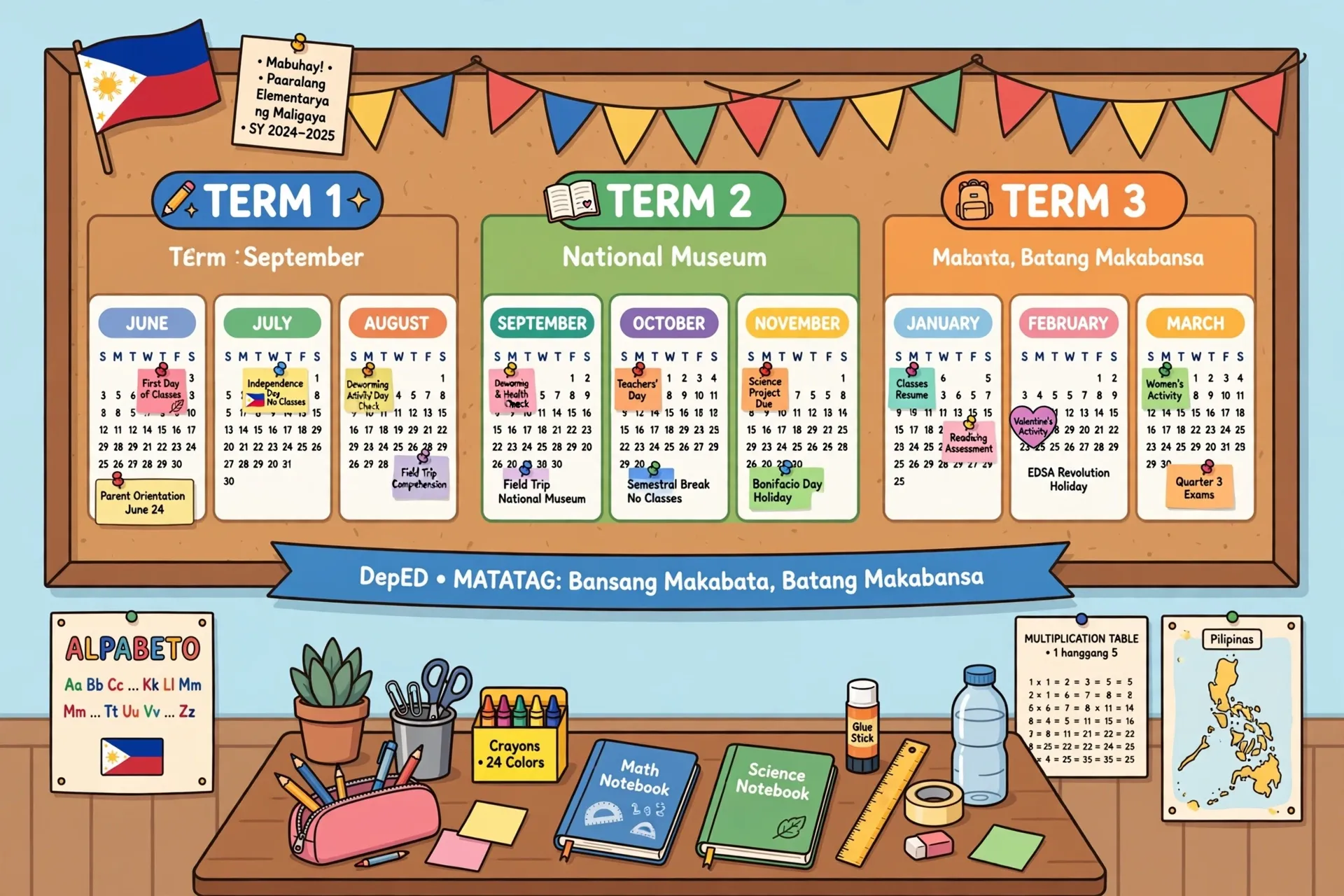
Here’s the skeleton of the entire school year, straight from DO 009, s. 2026 — the school calendar 2026 to 2027 DepEd Philippines at a glance. If you’re a parent, the rows that matter most are the breaks and the PTA report-card days. If you’re a teacher, it’s the term boundaries and exam dates. Bookmark accordingly:
| Milestone | Date | Details |
|---|---|---|
| Brigada Eskwela | June 1–5, 2026 | Nationwide school preparation; national kick-off May 29, 2026 in Cabadbaran City, CARAGA |
| Enrollment period | June 1–5, 2026 | Runs alongside Brigada Eskwela week |
| Opening of classes (Term 1) | Monday, June 8, 2026 | Formal start of SY 2026–2027; opening block June 8–11 |
| Term 1 instructional period | June 15 – September 1, 2026 | Regular classes; term exams August 28 and September 1 |
| Term 1 end-of-term activities | September 2–15, 2026 | Assessments and closing activities; report cards September 9 |
| Term 2 | September 16 – December 18, 2026 | Exams December 3–4; end-of-term activities December 7–18 |
| Year-end break | December 19–31, 2026 | Christmas break; report cards December 15 |
| Term 3 | January 4 – April 8, 2027 | Instructional period January 4 – March 23; exams March 15–16 (graduating), March 22–23 (others) |
| Early registration (SY 2027–2028) | January 30 – February 26, 2027 | Incoming Kindergarten, Grades 1, 7, and 11 |
| End-of-school-year rites | April 6–7, 2027 | Graduation and moving-up ceremonies |
| End of school year | Thursday, April 8, 2027 | Last day; 201 class days total |
Term 1: June 8 to September 15, 2026
Term 1 of the school calendar 2026 to 2027 DepEd Philippines eases in — and that easing-in is new. The opening block (June 8–11) is four days of start-of-school activities: orientations, diagnostic assessments, sorting out classroom assignments, getting sections settled. Under the old system, schools were expected to hit full speed almost immediately. Now there’s an official on-ramp. Use it for what it’s for — don’t burn it on lessons you could teach better in week three.
Regular instruction then runs June 15 to September 1. That’s roughly eleven straight weeks of teaching, noticeably longer than the old first quarter ever allowed. For teachers, this is the single biggest practical win of the reform: you can actually finish a unit without the quarterly exam breathing down your neck in week eight.
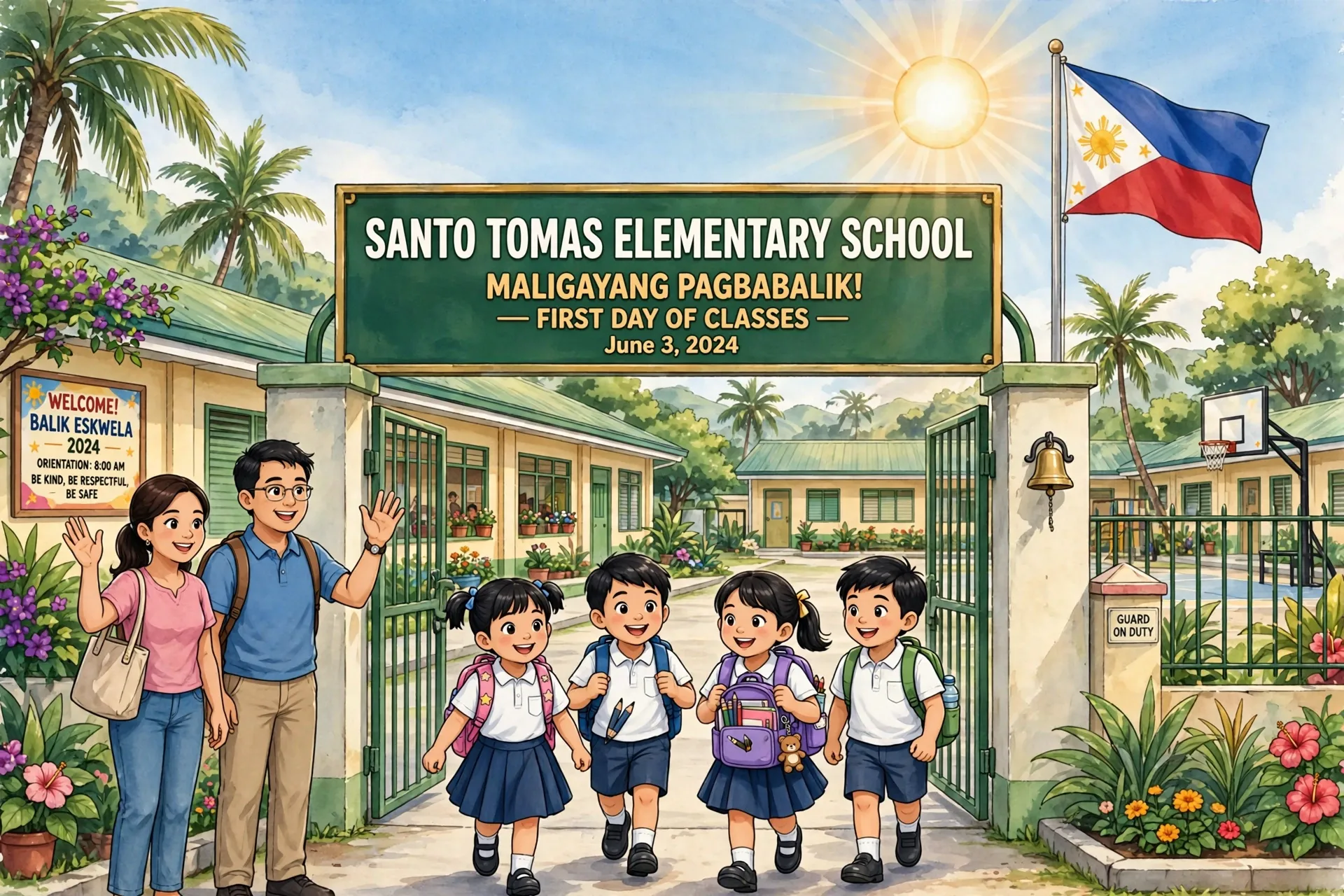
Term exams land on August 28 and September 1. After that, the end-of-term block (September 2–15) handles checking, remediation, and closing activities — including ARAL sessions for learners who need them. Report cards go out at a PTA meeting on September 9, while the term is still fresh in everyone’s memory. Which is rather the point: feedback lands when it can still change something.
A word for families with a child entering a new key stage — Grades 1, 7, or 11: Term 1 sets the tone for the whole year, and the first two months carry disproportionate weight. Showing up consistently in June and July matters more than it looks. That’s when teachers map out every learner’s starting point, run the diagnostics, and sort students into ARAL remediation groups. A child who misses the first three weeks isn’t just behind on lessons — they’re invisible to the system that’s supposed to catch them.
Term 2: September 16 to December 18, 2026
Term 2 of the school calendar 2026 to 2027 DepEd Philippines starts Wednesday, September 16 — no dead week in between, straight back in. That no-gap transition is worth pausing on, because it’s a deliberate design choice. The old calendar scattered short breaks that fragmented momentum. The new one keeps learners in the flow and concentrates the rest where it belongs: at year-end.
The instructional stretch runs into early December, and this is where the three-term design earns its keep. Under the old quarters, the second quarter always slammed into the Christmas season: rushed exams squeezed between program rehearsals, patchy December attendance, everyone running on fumes. Teachers used to joke that December was a write-off. Now the term finishes first, exams done December 3–4, closing activities December 7–18, and the holidays get to be holidays.
Report cards come out December 15 at the PTA meeting — before the break, not after. That’s a small scheduling decision with a big psychological difference: families go into Christmas knowing exactly where their child stands, instead of waiting until January to find out.
Then the year-end break: December 19–31, thirteen days with no academic loose ends trailing into January. No take-home projects due January 4. At least, that’s the design — hold your school to it.
Teachers, a practical tip from the calendar itself: plan Christmas program rehearsals around the December 3–4 exams, not through them. The December 7–18 block officially belongs to assessments and closing activities. Rehearsals fit naturally there. Your students’ exam scores will thank you.
Term 3: January 4 to April 8, 2027
Term 3 of the school calendar 2026 to 2027 DepEd Philippines opens on Monday, January 4, 2027 — and it’s a sprint. Instruction runs January 4 to March 23, then everything compresses toward the finish line. If Term 1 was about foundations and Term 2 about momentum, Term 3 is about landing the plane.
Final exams are staggered this time, and the staggering tells you something about DepEd’s priorities. Graduating and moving-up learners — Kindergarten completers, Grades 6, 10, and 12 — take theirs March 15–16. Everyone else follows on March 22–23. That one-week gap is deliberate: it lets schools finalize the outgoing learners’ records first, so graduation lists, clearances, and form 137s don’t jam up at the last minute. Anyone who’s worked a registrar’s office in April knows exactly the chaos this prevents.
The end-of-term block stretches March 24 to April 8. It holds the end-of-school-year rites on April 6–7 — graduation, moving-up ceremonies, the whole emotional gauntlet — and the final day of classes on Thursday, April 8. Last report cards go out at a PTA meeting that same day. 201 class days, done. Summer starts the next morning.
For graduating families: work backwards from April 6. Clearances, yearbook settlements, toga arrangements — all of it clusters into late March. The schools that run this smoothly start the paperwork in February. If yours hasn’t mentioned it by March, ask.
Before the First Bell: Brigada Eskwela and Enrollment
In the school calendar 2026 to 2027 DepEd Philippines, the week before opening day belongs to Brigada Eskwela, and if you’ve never volunteered, here’s what it actually looks like: parents with paintbrushes, teachers hauling desks, alumni showing up with electric fans, the whole barangay descending on the school for five days. Under DepEd Memorandum No. 027, s. 2026, issued May 5, 2026, the 2026 drive ran June 1–5, with the theme “Bayanihan sa Paaralan: Nagkakaisa para sa Kaayusan at Kaalaman.”
This year wasn’t just sweeping and repainting. The official focus areas included reading corners and libraries, electrical safety checks, and disaster resilience — a noticeable shift from cosmetic fixes toward things that actually affect learning and safety. A freshly painted wall is nice. Wiring that won’t start a fire is better.
The national kick-off happened May 29, 2026, in Cabadbaran City, CARAGA, with regional kick-offs going simultaneous on June 1. Afterwards, schools filed their accomplishment reports upward — divisions by mid-July, regions to the central office by July 30 — through the DepEd Partnerships Database System. Yes, even volunteer work generates paperwork. This is DepEd.
Two rules are worth knowing cold, because schools don’t always volunteer them. First, participation is strictly voluntary. Schools may not collect mandatory Brigada Eskwela fees or demand contributions from parents and learners — that’s not a suggestion, it’s the rule, and it exists because some schools got creative about “voluntary” donations. Second, teachers who took an active part can earn vacation service credits (non-teaching staff get compensatory time off instead). If you volunteered, those credits are yours. Claim them — they don’t claim themselves.
Enrollment ran on that same June 1–5 window, which surprises first-time parents: yes, enrollment and school prep happen simultaneously, in the same chaotic week. And looking one year ahead, early registration for SY 2027–2028 is already on the books — January 30 to February 26, 2027, for incoming Kindergarten, Grade 1, Grade 7, and Grade 11 learners. Mark it now; future you will be grateful.
What About Private Schools?
Here’s the fine print, and it matters more than people think: the three-term calendar binds public schools only. Private schools, state and local universities and colleges offering basic education, and Philippine Schools Overseas are welcome to adopt it — none of them have to. DepEd can mandate for its own schools; everyone else gets an invitation.
That freedom has fences, though. Every school still answers to Republic Act No. 7797, as amended by RA 11480: the school year must run 200 to 220 class days, and it must open sometime between the first Monday of June and the last day of August. Public schools land at 201 days under DO 009 — right inside the legal window, near the floor. A private school running 210 days on a quarter system is perfectly legal. So is one running 205 days on trimesters. The law cares about the day count and the opening window, not the internal shape.
So if your child is in private school, don’t just assume these dates are yours. Plenty of private schools mirror DepEd’s calendar — it’s simpler for everyone. Plenty don’t, especially the ones with international affiliations or their own traditions. Check your school’s own published schedule, and do it before you book anything non-refundable. Every year, some family learns this lesson the expensive way.
What the New Calendar Means for Teachers
Your planning arcs just got longer under the school calendar 2026 to 2027 DepEd Philippines, and that changes more than the dates on your planner. Forget the old ten-week quarterly bursts — you’re now building in eleven-plus-week terms, each with a formal end-of-term block for remediation and enrichment. That block is the thing to take seriously, because it’s the first time the calendar has ever handed you officially sanctioned catch-up time. Slot your ARAL sessions into those windows on purpose instead of wedging them into lunch breaks.
Class records, grading periods, lesson pacing: all of it needs re-mapping around three term exams instead of four quarterlies. Practically speaking, that means fewer but weightier assessment points — each term exam now carries more of the year’s grade than any single quarterly ever did. If your school hasn’t handed you a localized template yet, re-chunk the old quarterly plans yourself. Treat each term exam as the summative anchor, and let the end-of-term block absorb the checking week you used to cram in wherever it fit.

There’s an upside hiding in the longer terms that nobody talks about: projects. The old quarters were too short for anything ambitious — by the time students got into a research project or a performance task, the quarterly exam arrived. Eleven-week terms finally fit real project-based work. If you’ve been wanting to try it, this is the year the calendar stops fighting you.
One housekeeping item, and it matters: DO 009 repeals DepEd Order No. 012, s. 2025 — the old multi-year calendar guidelines — in full. It also amends the enrollment rules in DO 017, s. 2025. If that old multi-year calendar is still pinned to your faculty room bulletin board, it’s superseded. Take it down before it confuses a new teacher.
Since assessments now spread across three terms instead of four quarters, our guide to computing grades under MATATAG is worth a re-read — written works, performance tasks, and assessments all sit differently in the new rhythm, and the weighting math changes with them.
For Parents: Planning Around the New Calendar
Here’s the upside for families under the school calendar 2026 to 2027 DepEd Philippines: planning actually gets simpler, because the breaks are cleaner. There is exactly one long break — December 19–31. The old October semestral break? Gone, folded into the term flow. So if your family always traveled in October — and a lot of families did, because the semestral break was perfectly placed for it — that window doesn’t exist anymore. Take the trip inside the December break, or hold out for the long summer after April 8. There is no third option this year.
Report cards now arrive through PTA meetings — September 9, December 15, April 8 — not just tucked into your child’s bag on a random school day. Each card reflects one complete learning arc, which makes the teacher’s comments worth more than the grades printed above them. A “developing” in September means something different from a “developing” in April, and the teacher can tell you which one you’re looking at. Try to be there in person; the ten minutes of context are worth more than the card itself.
Budget-wise, note the new expense rhythm too. Three terms means three enrollment-adjacent spending bumps are gone — but the start-of-year costs (uniforms, supplies, projects) now concentrate in June, and graduation costs cluster in March. Plan for two big outflows instead of four medium ones.
And one date to circle if you’re enrolling for next school year: early registration runs January 30 to February 26, 2027. It helps the school plan class sizes — and it spares you the June registration crush, which anyone who’s queued at a registrar’s window in June will tell you is worth avoiding at almost any cost.
Frequently Asked Questions
Quick answers about the school calendar 2026 to 2027 DepEd Philippines:
When do classes start for SY 2026–2027?
Monday, June 8, 2026, for public schools — that’s per DepEd Order No. 009, s. 2026, and it was one of the most widely reported education stories of April 2026. Private schools set their own opening dates inside the window the law allows, so theirs may differ by weeks.
When does the school year end?
Thursday, April 8, 2027. That’s 201 class days, with the end-of-school-year rites — graduation, moving-up — on April 6–7, just before the finish line. Summer vacation starts April 9, for all practical purposes.
What is the three-term school calendar?
The new structure replacing the four-quarter system. The year splits into three terms, and every term has three parts: an opening block for start-of-term activities like orientations and diagnostics, an instructional block for regular classes, and an end-of-term block for assessments, remediation, and closing activities. Think of it as three complete school years in miniature, back to back.
Is there still a semestral break?
No — and this one genuinely surprises people, because the October semestral break was an institution. Families planned around it for years. It’s gone entirely, absorbed into the term flow. The only extended break in the whole year is December 19–31, 2026. Plan accordingly, especially if you already booked October travel out of habit.
Do private schools follow the same calendar?
Not necessarily, and don’t assume. They’re free to adopt the three-term calendar, but nothing forces them to — DepEd’s mandate covers public schools. What does bind every school is the legal floor: 200–220 class days a year under RA 7797 as amended by RA 11480, opening between the first Monday of June and the last day of August. Always check your own school’s published calendar before making plans.
Where can I read the official DepEd Order?
On the DepEd website itself — deped.gov.ph — where the order was published, or ask your schools division office for a copy. It took effect immediately upon approval and publication, which is why schools had to scramble their planning calendars in May.
Conclusion
The school calendar 2026 to 2027 DepEd Philippines isn’t just dates on a wall — it’s the first year of a genuinely different school rhythm, and first years are always the awkward ones. Three terms. 201 days. Cleaner breaks. Protected time for teaching and for catching up the kids who need it. June 8 to April 8, with graduation in the first week of April.
Teachers: rebuild your plans around the three terms, take the end-of-term blocks seriously, and try the project you’ve been postponing — the calendar finally fits it. Parents: December 19–31 is your travel window, the three PTA meetings are your check-ins, early registration opens January 30, and please don’t book October trips out of habit. Bookmark this school calendar 2026 to 2027 DepEd Philippines guide for the year ahead. The calendar has done its part. The rest, as always, is execution.
Sources & References
- DepEd Order No. 009, s. 2026 — Guidelines on the Implementation of the Three-Term School Calendar in Basic Education (disseminated via Division Memorandum No. 171, s. 2026, DepEd Bataan: PDF)
- DepEd official website: deped.gov.ph
- The Philippine Star, April 18, 2026 — Angara: Classes start on June 8
- DZRH News, April 2026 — DepEd: School Year 2026–2027 to start June 8, end April 8
- Malaya Business Insight, April 2026 — DepEd announces June 8 opening for SY 2026-2027
- Daily Tribune, April 20, 2026 — Classes to start on 8 June under new three-term calendar
- DepEd Club — DepEd Three-Term School Calendar for SY 2026–2027: Key Dates, Guidelines and Features
- DepEd Memorandum No. 027, s. 2026 — 2026 Brigada Eskwela Implementing Guidelines (via DepEd Club and TeachPinas)
- Cebu Daily News (Inquirer), May 2026 — Explainer: How Brigada Eskwela prepares public schools
- SchoolFinderPH — The Philippine School Calendar for Foreign Families (term-by-term cross-check)
- Related on this site: DepEd Order 010 s. 2024 Explained, How to Compute Grades in the MATATAG Grading System