HUMSS Strand Courses: What College Programs and Careers Await You (2026)
If you searched for humss strand courses, you are probably a Grade 10 or Grade 11 student asking one big question: “If I take HUMSS, what college courses can I take after?” Here is the short answer: HUMSS — Humanities and Social Sciences — prepares you for college courses about people, society, language, and ideas. Think Psychology, Political Science, Communication, Education, Social Work, and Law (as pre-law). This guide lists those courses, the careers they lead to, the SHS subjects you will take, and one important update: under the new Strengthened SHS system, strands work differently than before.
Everything below is written in plain words. There is a course matcher tool to help you pick, plus a free PDF at the end.
Download the free HUMSS courses checklist (PDF)
What Is the HUMSS Strand?
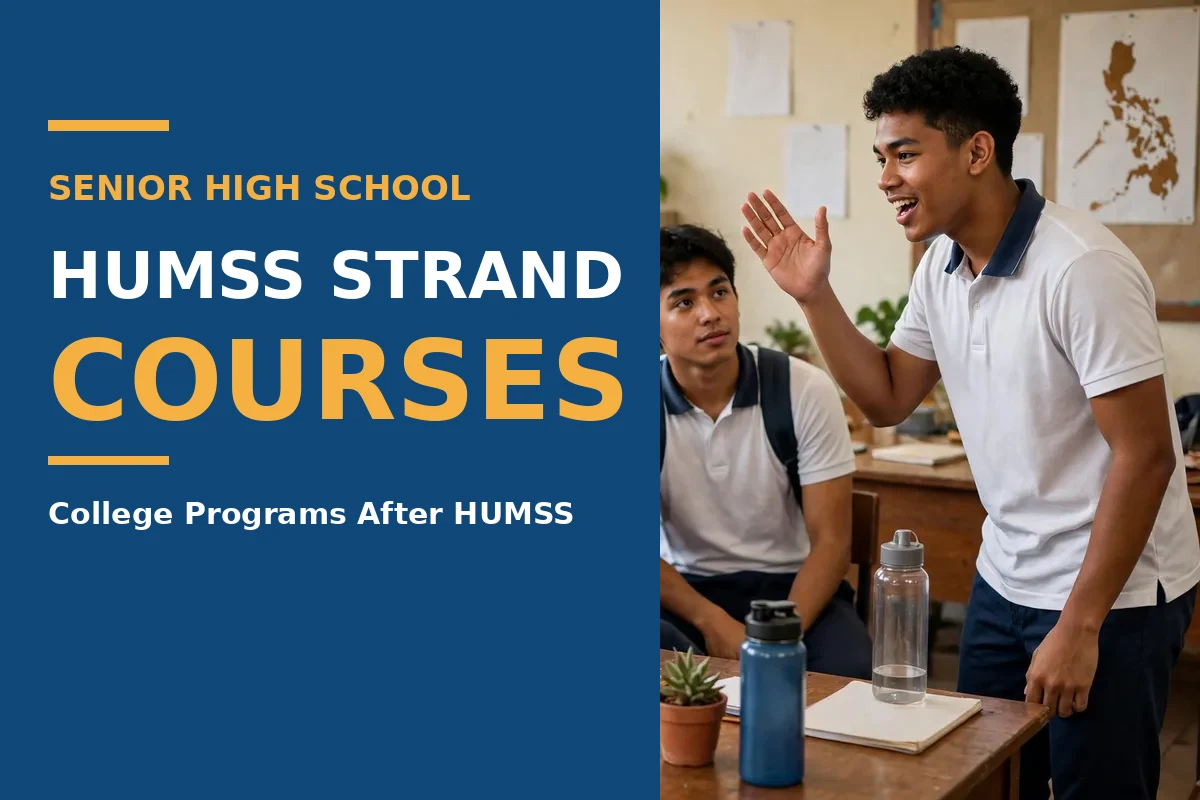
HUMSS stands for Humanities and Social Sciences. Under the old K-12 system (Republic Act No. 10533), Senior High School had an Academic Track with four strands: STEM, ABM, HUMSS, and GAS. HUMSS was the strand for students who wanted to study people and society — how humans think, talk, govern, create, and live together.
HUMSS builds four skills more than anything else: critical thinking (judging ideas carefully), communication (speaking and writing clearly), research (finding and checking facts), and empathy (understanding other people). These skills are useful in almost any job, which is why HUMSS graduates do well in many different fields.
One myth to clear up first: HUMSS is not the “easy” strand. It simply trades heavy math and lab work for heavy reading and writing. HUMSS students regularly write research papers, position papers, and case analyses. Students who dislike reading and writing often find HUMSS harder than they expected.
Important Update: Strands Under Strengthened SHS
Here is something many guides do not tell you. Under the Strengthened Senior High School curriculum, the old strands — including HUMSS — were removed. Instead, there are now only two tracks: Academic and Technical-Professional (TechPro). In Grade 11, students take five core subjects, and in Grade 12 they choose elective clusters (for example, the Arts, Social Sciences, and Humanities cluster) instead of a strand.
So why does this guide still talk about “HUMSS strand courses”? Two reasons. First, many schools, parents, and students still use the HUMSS name, and colleges still group these courses the same way. Second, the college courses below are the same ones HUMSS students have always gone into — the name of the SHS track changed, but the college paths did not. If your school now uses clusters, pick the Social Sciences and Humanities cluster to follow the HUMSS path. For the full story, read our SHS curriculum guide.
HUMSS Subjects in Senior High School
Under the old strand system, HUMSS students took core subjects shared with other strands, plus eight specialized subjects of their own, plus a final culminating activity or work immersion. Here are the specialized subjects:
| Specialized Subject | What You Learn |
|---|---|
| Creative Writing / Malikhaing Pagsulat | Poetry, fiction, and creative composition |
| Creative Nonfiction | Personal essays, memoirs, and true stories told well |
| Introduction to World Religions and Belief Systems | Major world religions and belief traditions, compared fairly |
| Community Engagement, Solidarity, and Citizenship | Civic participation, social responsibility, community work |
| Philippine Politics and Governance | How Philippine government works, and how policies are made |
| Trends, Networks, and Critical Thinking in the 21st Century | Media literacy, digital trends, and sharp thinking |
| Disciplines and Ideas in the Social Sciences | Basic theories of sociology, anthropology, and political science |
| Disciplines and Ideas in the Applied Social Sciences | Counseling, social work, and communication in real life |
| Culminating Activity / Work Immersion | A research project or supervised work in a related field |
On top of these, HUMSS students took core subjects like Oral Communication, Reading and Writing, General Mathematics, Statistics and Probability, Earth and Life Science, Understanding Culture, Society, and Politics, Philosophy, 21st Century Literature, and Practical Research 1 and 2. Yes, HUMSS has math — General Math and Statistics — but it focuses on reading data and understanding numbers, not on heavy equations like STEM.
HUMSS Strand Courses in College
Here are the college courses HUMSS graduates most commonly take, grouped by interest. Remember: Philippine colleges generally do not legally require the HUMSS strand for these programs — students from other strands can enroll too. HUMSS simply gives you a head start in reading, writing, and research.
| College Course | What It Is About | Leads To |
|---|---|---|
| AB Political Science | Government, politics, law, and public policy (the classic pre-law course) | Lawyer, government worker, policy analyst |
| AB / BS Psychology | How people think, feel, and behave (BS adds more biology and chemistry) | Counselor, psychologist, HR specialist |
| AB Communication / Journalism / Mass Communication | Media, writing, speaking, and public messaging | Journalist, writer, PR officer, content creator |
| Education (BEEd / BSEd) | Teaching children or high school students | Teacher, school counselor, trainer |
| BS Social Work | Helping people and communities in need | Social worker, community organizer |
| AB Sociology / Anthropology | How societies and cultures work | Researcher, community worker, NGO worker |
| AB History / Philosophy / Literature | The past, big ideas, and great writing | Teacher, writer, researcher, museum worker |
| BS Criminology | Crime, law enforcement, and justice | Police officer, investigator, corrections officer |
| AB Economics / Public Administration | How money, markets, and government work | Government worker, analyst, manager |
HUMSS Course Matcher (Tool)
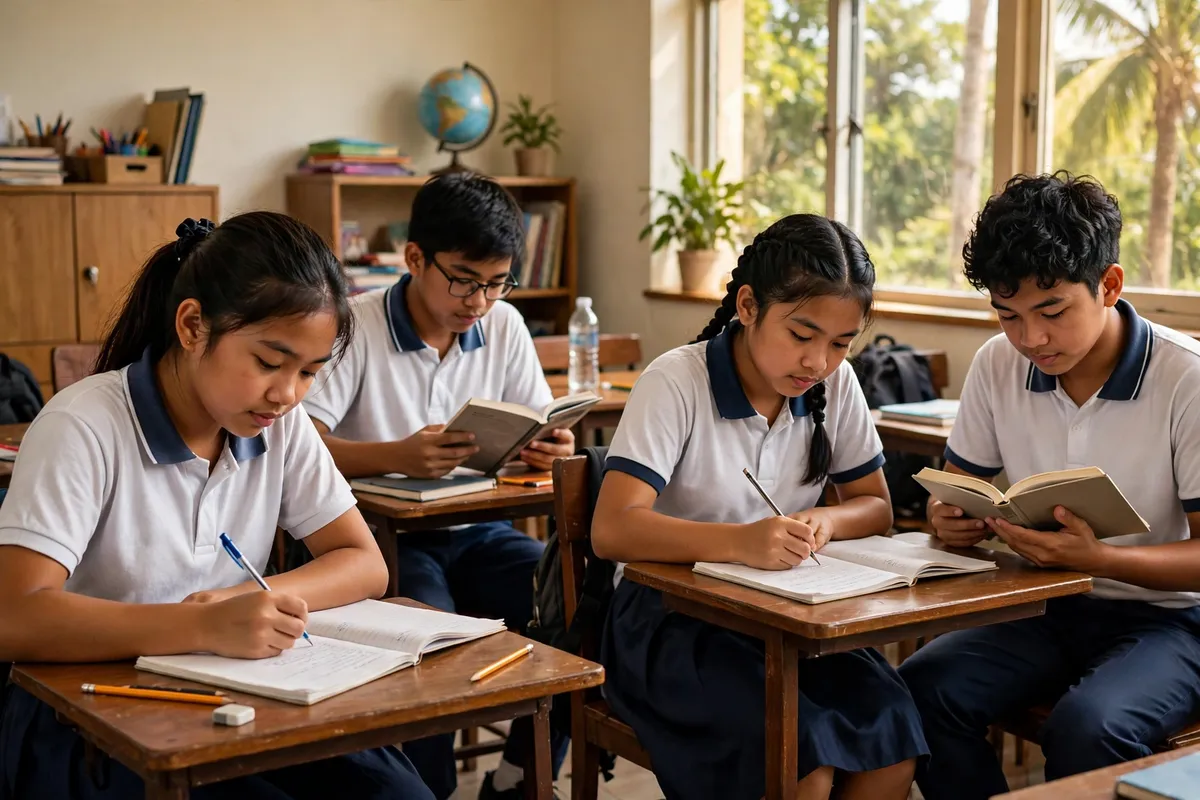
Not sure which course fits you? Pick what interests you most. The tool will suggest HUMSS courses and sample careers. This is a guide, not a test — talk to your school counselor before deciding.
Careers After HUMSS
A HUMSS degree does not lock you into one job. The same skills — clear writing, sharp thinking, research, and understanding people — fit many roles: teacher, counselor, journalist, social worker, lawyer, human resource specialist, public relations officer, researcher, community organizer, and policy advocate. HUMSS graduates also work in NGOs, media companies, government offices, schools, and even international organizations like the United Nations.
One practical tip: your SHS strand does not decide your future by itself. Colleges set their own entrance rules, and many HUMSS-path courses accept students from any strand. What matters more is your grades, your entrance exam, and the skills you actually built. HUMSS just makes the first year of these courses feel familiar instead of foreign.
Myths About HUMSS
- “HUMSS is easy.” Wrong. It replaces math-heavy work with reading- and writing-heavy work. If you hate essays, HUMSS will feel hard.
- “HUMSS has no math.” Wrong. You take General Mathematics and Statistics and Probability — just with less focus on complex equations than STEM.
- “Only HUMSS students can take Psychology or Political Science.” Wrong. Colleges generally do not require a specific strand; HUMSS graduates just arrive better prepared.
- “HUMSS is only for future lawyers.” Wrong. Law is one path. Teaching, media, counseling, social work, and research are just as common.
- “HUMSS is useless if strands are gone.” Wrong. Under Strengthened SHS, the Social Sciences and Humanities elective cluster continues the same path — only the label changed.
Frequently Asked Questions
What is the HUMSS strand?
Humanities and Social Sciences — the SHS strand for students interested in people, society, language, and ideas. Under Strengthened SHS, strands were replaced by tracks and elective clusters, but the HUMSS path continues through the Social Sciences and Humanities cluster.
What college courses can HUMSS graduates take?
Most commonly: Political Science (pre-law), Psychology, Communication/Journalism, Education, Social Work, Sociology, History, Philosophy, Literature, Criminology, and Economics.
Do I need HUMSS to take Psychology or Political Science in college?
No. Philippine colleges generally do not legally require a specific SHS strand for these programs. HUMSS gives you useful preparation, not a requirement.
Does HUMSS have math?
Yes — General Mathematics and Statistics and Probability, focused on understanding data rather than complex equations.
Is HUMSS good for becoming a lawyer?
Yes. AB Political Science is the classic pre-law course, and HUMSS builds the reading, writing, and argument skills law school needs.
Can I take a medical course after HUMSS?
It is possible but harder, because HUMSS does not focus on science subjects. You may need bridging programs or extra science courses.
Conclusion
HUMSS strand courses open doors to the most people-centered careers in the country: law, teaching, counseling, media, social work, and public service. The strand itself teaches you to read deeply, write clearly, argue fairly, and understand society — skills that stay useful whatever job you end up in. And remember: even though Strengthened SHS changed the labels, the path is still there through the Social Sciences and Humanities cluster.
Sources & References
Grab the free PDF below for the full course list and career map in one printable page. If you are still choosing your SHS path, read our SHS curriculum guide and our Grade 10 subjects guide — and start at the MATATAG Curriculum for the complete picture.
- DepEd K-12 Senior High School Curriculum — HUMSS strand specialized subjects
- DepEd Memorandum No. 012, s. 2026 — Strengthened SHS full implementation for Grade 11 (strands replaced by tracks and elective clusters)
- Republic Act No. 10533 — Enhanced Basic Education Act of 2013
- SchoolFinderPH HUMSS strand guide