SF10 Form 137: Complete Guide to Your Permanent School Record (2026)
If you searched for sf10 form 137, you are looking for the single most important school document in Philippine basic education: the learner’s permanent academic record. SF10 — School Form 10 — is the current name for what generations of Filipinos knew as Form 137. It is the cumulative record of everything a learner accomplished in a school level: every grade, every subject, every promotion, from first enrollment to completion.
Parents usually meet SF10 at exactly one stressful moment: transferring schools, applying for college, or gathering documents for work or a visa. This guide explains what SF10 contains, how it differs from the report card, how transfers actually work (including the rule most parents get wrong), how to request a copy for any purpose, and what to do when a record is lost or a school has closed. There is a request checker tool and a free PDF at the end.
SF10 Request Checker (Tool)
Pick your situation and see exactly where to go and what to ask for.

What Is SF10 Form 137?
SF10 is the Learner’s Permanent Academic Record. DepEd’s school forms identify it exactly that way, with the note “formerly Form 137,” and provide separate SF10 formats for elementary, junior high school, and senior high school. DepEd Order No. 54, s. 2016 defines Form 137 as the permanent school learner record showing the historical academic and co-curricular record of the learner.
Here is what an SF10 normally contains:
| Section | What It Shows |
|---|---|
| Learner identity | Full name and personal details, Learner Reference Number (LRN) |
| Schools attended | Every school the learner attended within that level |
| Grade levels and school years | Each grade level completed and the school year it was completed in |
| Subjects and final ratings | Subjects taken and final grades per school year |
| Promotion status | Promoted, retained, or completed, per year |
| Attendance and other records | Attendance and other required academic information, including co-curricular record |
Two things make SF10 different from every other school document. First, it is cumulative: one SF10 follows the learner across schools and years within a level, growing as the learner progresses. Second, it is permanent: the school keeps it, and the Schools Division Office holds the records too. Parents do not keep the original — and that fact drives the most common misunderstanding about SF10, covered below.
SF10 vs SF9: Don’t Confuse Them
The other form every parent knows is the report card. Under the current naming, the report card is SF9 — formerly Form 138. Confusing SF9 with SF10 causes more wasted trips to the registrar than any other paperwork mistake, so here is the clean distinction:
| SF10 (formerly Form 137) | SF9 (formerly Form 138) | |
|---|---|---|
| What it is | Permanent academic record | Report card / progress report |
| Coverage | Cumulative — all years and schools in the level | One school year (or one grading period) |
| Who holds it | The school (and the Schools Division Office) | The parent or learner — it goes home |
| When you need it | Transfers, graduation verification, college, work, visa, authentication | Checking this year’s or this quarter’s grades |
The practical test is simple: if someone asks how your child did this quarter, that is SF9, and it is probably already in a drawer at home. If a receiving school, a college, an embassy, or an employer wants proof that a learner completed Grade 6, Grade 10, or Grade 12 — and at which schools — that is SF10. A single report card cannot prove it. For how those final ratings on the SF10 are computed, see our MATATAG grading system guide.
How School Transfers Work (The Rule Parents Get Wrong)
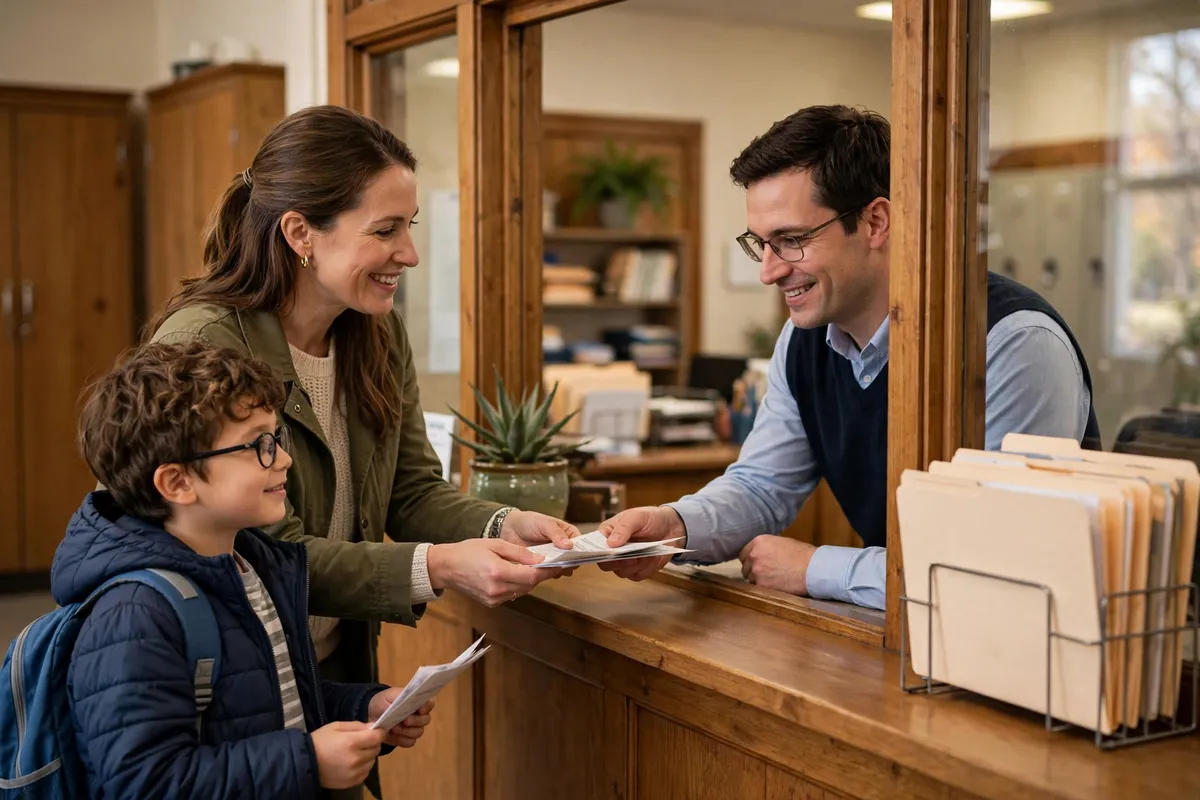
Here is the rule most parents get wrong: you are not supposed to carry SF10 yourself. Under DepEd Order No. 54, s. 2016, the transfer of records must be made “easy and quick, without encumbering the learners and parents,” and learners and parents or guardians are not allowed to hand-carry the permanent records to the receiving school. The transfer is school-to-school.
How it actually works, step by step:
- Enroll at the receiving school with what you have: the learner’s SF9 (report card) or, under DepEd Order No. 03, s. 2018, a letter certifying the last grade level completed, signed by the school registrar.
- The receiving school requests the SF10 from the originating school through the prescribed school-to-school process, including the Learner Information System (LIS) where applicable.
- The originating school sends it directly to the receiving school — not to you, not in your envelope.
- Timing: for a transfer during the school year, the permanent record should be secured within 30 days from the learner’s first day of attendance. Follow up with the receiving school (not the old school) if the deadline passes — the receiving school owns the request.
If a school insists that you personally fetch and deliver the original SF10, that is not the standard process. Politely cite DepEd Order No. 54, s. 2016, and ask the receiving school to make the request through the LIS. There are exceptions in practice — some schools still hand parents sealed envelopes — but the official rule is school-to-school, and knowing it saves you from being bounced between two registrars.
How to Request SF10 for Any Purpose
Not every request is a transfer. What you ask for — and where — depends on why you need the record:
| Your Purpose | Where to Request | What to Ask For |
|---|---|---|
| Transferring to another Philippine basic education school | Receiving school (it requests from the originating school) | School-to-school transfer of SF10 via LIS |
| College, scholarship, work, or visa application | Last school attended, or the DepEd Schools Division Office | Certified true copy, certification, or authenticated copy — whatever the receiving institution specifies |
| School has closed | Schools Division Office with jurisdiction over the closed school | Certification or record retrieval assistance |
| You are abroad | School or SDO, through an authorized representative or by email | Certified copy, then CAV/apostille via DepEd Regional Office and DFA if needed |
| Name or birthdate has errors | School, then SDO (sometimes Regional Office) | Correction of the school entry first — before any certification or authentication |
The most important practical point: do not ask simply for “another original Form 137” unless the school specifically uses that language. Ask for the exact document your receiving institution requires — a certified true copy, a sealed school-to-school copy, a CAV copy, or an apostilled record. The original permanent record stays with the school; what you receive is a certified copy or certification. Asking for the wrong thing is the most common reason requests stall.
Have the LRN ready. It is the fastest way for a registrar to locate a record when a name alone is not enough — especially for common names or learners who changed schools. And know your right: the Education Act of 1982 (Batas Pambansa Blg. 232) recognizes parents’ right to access official records of their children and students’ right to their own records, and the issuance of official certificates and transcripts within 30 days from request, subject to lawful regulations.
If the School Lost Your SF10 — or Closed Down
When a school says it has lost a Form 137, the problem is serious — but usually fixable. The school should not simply tell you to “look for your old report cards” and leave it there. It must conduct a proper records search, coordinate with the Schools Division Office, and when necessary, reconstruct the record from reliable official sources — including the school’s SF5 (the school-level report on promotion and learning progress) and other division-held records.
If the school has closed entirely, go straight to the Schools Division Office with jurisdiction over that school and request certification or record retrieval assistance. If you get no action at the school level, escalate to the SDO in writing — a written request with the learner’s full name, LRN, school years attended, and grade levels completed moves faster than a verbal follow-up. And never pay a “fixer” for a school record: SF10 requests go through the school or the SDO, through official channels, with official receipts.
Common Mistakes With SF10
- Hand-carrying the original. The transfer is school-to-school under DO 54, s. 2016. Carrying it yourself is not the process — and a receiving school may refuse a hand-carried original.
- Asking for “another original.” The original stays with the school. Ask for the certified copy or certification your institution actually requires.
- Submitting SF9 when SF10 is required. A report card proves one year. A transfer, a college, or an embassy usually needs the permanent record.
- Following up with the wrong school. For transfers, the receiving school owns the request. Follow up there, not at the old school.
- Ignoring errors until authentication. A wrong name or birthdate must be corrected at the school/SDO level first — authenticating a wrong record wastes the whole process.
- Paying fixers. School records are requested through official channels only. Anyone charging a shortcut fee is not part of the process.
Frequently Asked Questions
What is SF10?
School Form 10, the Learner’s Permanent Academic Record — formerly called Form 137. It is the cumulative record of a learner’s grades, promotion status, attendance, and schools attended within a school level.
Is Form 137 the same as SF10?
Yes. Form 137 is the old name; SF10 is the current name for the same permanent record.
What is the difference between SF9 and SF10?
SF9 (formerly Form 138) is the report card for one school year. SF10 (formerly Form 137) is the permanent cumulative record across years and schools.
Can parents hand-carry Form 137 to the new school?
No. Under DepEd Order No. 54, s. 2016, transfers are school-to-school through the LIS. Parents and learners are not allowed to hand-carry the permanent record.
How long does a school transfer of SF10 take?
For a mid-year transfer, the permanent record should be secured within 30 days from the learner’s first day of attendance at the receiving school.
What if my school closed down?
Go to the Schools Division Office with jurisdiction over the closed school and request certification or record retrieval assistance.
Can I get Form 137 online or by email?
Some schools accept online requests, but the permanent record is never emailed directly to learners. It moves officially between schools, or as a certified copy for other purposes.
Conclusion
SF10 — the old Form 137 — is the document that proves a learner’s whole school history in one place. That is why every sf10 form 137 request should start with the purpose, not the form name: the purpose decides whether you need a school-to-school transfer, a certified copy, or a correction first. Remember three things: it is cumulative and permanent, so it outlasts any single report card; transfers move school-to-school and you should never be asked to hand-carry the original; and for every other purpose, you ask for a certified copy, not “another original.”
If you want the request steps for every situation in one printable page, grab the free PDF below. For the complete subject picture across all grades, start at the MATATAG Curriculum and follow the guides from there.
Sources & References
- DepEd Order No. 54, s. 2016 — Guidelines on the Request and Transfer of Learner’s School Records
- DepEd Order No. 03, s. 2018 — Basic Education Enrollment Policy (transfer requirements)
- DepEd Order No. 11, s. 2018 — school forms and LIS guidelines
- Batas Pambansa Blg. 232 — Education Act of 1982 (access to school records)
- Respicio — How to Correct or Obtain School Records and Credentials