PE and Health Curriculum Guide: What Grades 4-10 Learn in Movement and Wellness (2026)
If you searched for the pe and health curriculum guide, you want to know what Filipino students actually learn in Physical Education and Health under MATATAG — from Grade 4 to Grade 10. Short answer: students learn two things side by side. One, how to move well — through games, sports, dance, and exercise. Two, how to live healthy — through lessons on hygiene, nutrition, mental health, safety, and consumer rights. This guide explains both parts, grade by grade, plus how MAPEH grades work, how much time it gets, and an activity picker tool to try at home or in class.
Everything below is written in plain words, with a free PDF at the end.
Download the free PE and Health checklist (PDF)
PE & Health Activity Picker (Tool)
Pick a grade band and a goal. The tool will suggest an activity, the skill it builds, and what you need. Teachers can use these in class; parents can use them at home.
What Is PE and Health Under MATATAG?
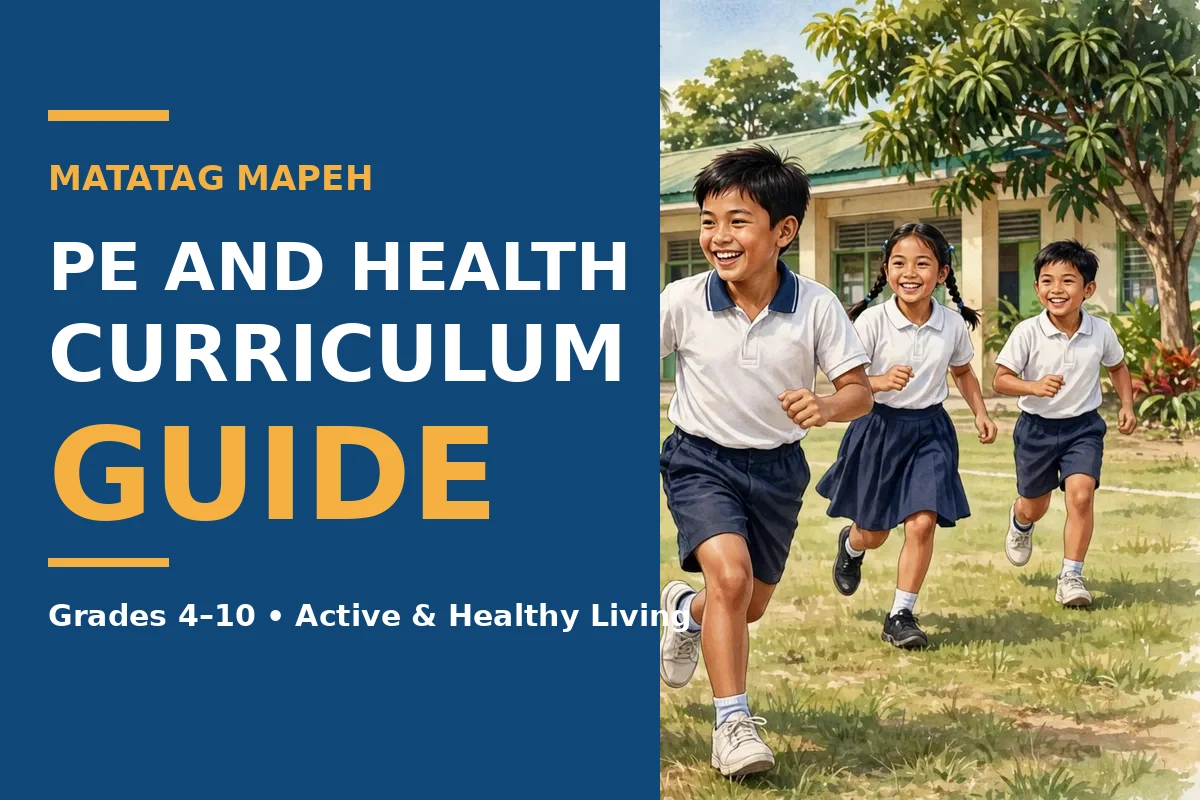
PE and Health is one of the two parts of MAPEH under the MATATAG curriculum. The official guide is called “MATATAG Curriculum: Physical Education and Health (Grades 4-10)” (August 2023). Its big goal is simple: students should combine health knowledge and physical skills to manage their own wellness — personal, family, community, and societal — for active and healthy living.
Here is the key fact many parents miss: MAPEH is graded as two parts, not four. Your child’s MAPEH grade each quarter is the average of two grades — the Music and Arts grade and the PE and Health grade. So PE and Health counts for half of MAPEH. It is not a “minor” subject.
The guide is built on eight “Big Ideas.” The most important ones: good health habits are an investment in life; life skills (like decision-making, empathy, and asking for help) are essential for whole wellness; lifelong physical activity keeps you healthy; confident movement in many activities — play, games, exercise, sports, dance — at home, school, and in the community is essential for a healthy mind and body; and speaking up for healthy lifestyles helps others too.
What Students Learn, Grade by Grade
PE and Health runs from Grade 4 to Grade 10. In Grades 4-6, the focus is on fundamental and complex movement skills: coordination, teamwork, and health awareness. In Grades 7-10, students go deeper: they combine health and physical literacy in more complex activities and start tackling bigger topics like mental health, relationships, and consumer rights.
| Grade Band | Physical Education (Moving) | Health (Knowing) |
|---|---|---|
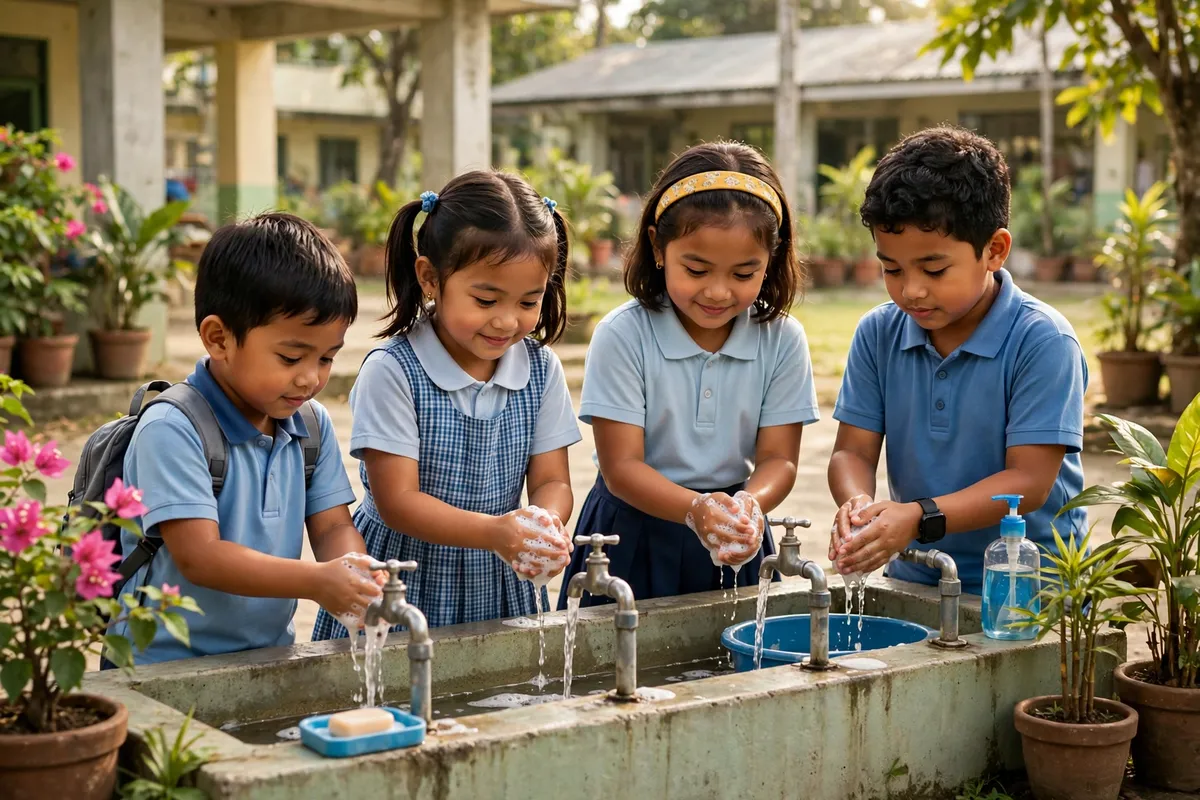
| Grade 4 (example: Quarter 1) | Target games — throwing and striking to a target, dodging obstacles, agility, balance, coordination, speed (moderate to vigorous activity) | Personal health, hygiene practices (handwashing, oral care, care of the senses), health appraisal (height, weight, BMI, vision, hearing, dental checks) |
| Grades 4-6 | Fundamental movement skills, target games, rhythmic activities, team games | Personal wellness, hygiene, body awareness, basic health rights |
| Grade 4 (example: Quarter 4) | Rhythmic activities and dances | Health rights, Filipino consumer rights and responsibilities, health facts, fitness fads |
| Grades 7-10 | Complex sports, dance, fitness programs, outdoor activities | Mental health, healthy sexuality, prevention of infections, gender issues, safety, consumer rights |
Notice the progression. In Grades 4-6, the focus is personal wellness: my body, my hygiene, my games. In Grades 7-10, the circle widens to family, community, and society: relationships, safety, consumer rights, and advocacy. Movement grows the same way — from fundamental skills like throwing and dodging to complex sports, fitness programs, and outdoor activities. The curriculum never asks students to jump ahead; each year builds on the last.
Two examples show how serious the health side gets. In Grade 4 Quarter 4, students learn Filipino consumer rights: the right to basic needs, safety, information, choice, representation, redress, consumer education, and a healthy environment — plus consumer responsibilities like critical awareness and wise decision-making. In Grade 8, students discuss healthy sexuality, prevention of sexually transmitted infections, and gender bias and discrimination — topics that help them stay safe and treat others fairly.
PE and Health Curriculum Guide: Time and Grading
MAPEH gets 45 minutes a day, five days a week — 225 minutes per week under the standard schedule (DepEd Order No. 010, s. 2024). Under the flexible options of DepEd Order No. 012, s. 2024, schools may use 50, 55, or 60 minutes four times a week, or propose their own schedule, as long as MAPEH gets at least 200 minutes per week. PE and Health shares this MAPEH time with Music and Arts — the two components split the block across the week.
Grading is simple and fair: each quarter, the Music and Arts grade and the PE and Health grade are averaged to make the MAPEH grade. So a student who is strong in sports but weak in music — or the reverse — still has a balanced result. For the full time schedule, read our time allotment guide and our MAPEH curriculum guide.
How Students Are Assessed
PE and Health does not rely on written tests alone. Teachers use formative assessment during lessons — self-assessment, peer assessment, and performance tasks — plus summative assessment like quizzes and skills demonstrations. In practice, this means students show what they can do (a dance, a game skill, a health plan), not just what they memorized. Younger learners (Kindergarten to Grade 3) meet movement and health inside Makabansa and play-based activities, since the PE and Health guide formally starts at Grade 4.
Healthy Habits at Home
Parents can support PE and Health without any equipment. Three habits matter most: daily movement (at least 60 minutes of active play for children), proper hygiene (handwashing, oral care, enough sleep), and honest health talk (mental health, safety, and respectful relationships). The pe and health curriculum guide itself says it best: health is a daily practice, not a test topic — and the best classroom for it is home.
For the complete picture of the arts side of MAPEH, see our MAPEH curriculum guide — and start at the MATATAG Curriculum for everything else.
Frequently Asked Questions
What is PE and Health under MATATAG?
It is one of the two components of MAPEH for Grades 4-10, covering movement skills (games, sports, dance, fitness) and health knowledge (hygiene, nutrition, mental health, safety, consumer rights).
How is MAPEH graded?
Each quarter, the Music and Arts grade and the PE and Health grade are averaged to make the MAPEH grade. PE and Health is half of MAPEH.
How much time does MAPEH get per week?
225 minutes per week under the standard schedule (45 minutes, 5 days), or at least 200 minutes under the flexible options of DepEd Order No. 012, s. 2024.
Does PE and Health start in Grade 4?
Yes, the formal PE and Health guide covers Grades 4-10. Younger children learn movement and health through Makabansa and play-based activities.
What health topics do older students learn?
Mental health, healthy sexuality, prevention of infections, gender issues, safety, and consumer rights — alongside complex sports and fitness.
Is PE only about sports?
No. Sports are one part. Dance, rhythmic activities, fitness, outdoor activities, and health lessons are equally part of the subject.
Conclusion
The pe and health curriculum guide is about much more than games. It teaches students to move with confidence, understand their bodies, protect their health, and care for their communities — from handwashing in Grade 4 to mental health and consumer rights in high school. And because it counts for half of MAPEH, it deserves the same attention as any other subject. Use the activity picker above, try one activity this week, and grab the free PDF below for the full grade-by-grade summary.
Sources & References
- DepEd — MATATAG Curriculum: Physical Education and Health (Grades 4-10), August 2023
- DepEd Order No. 010, s. 2024 — MATATAG K-10 Curriculum policy (time allotment)
- DepEd Order No. 012, s. 2024 — Flexible time allotment options (MAPEH at least 200 minutes per week)
- Official PE and Health Curriculum Guide (Scribd)