Music and Arts Curriculum Guide: What Grades 4-10 Learn Through Art (2026)
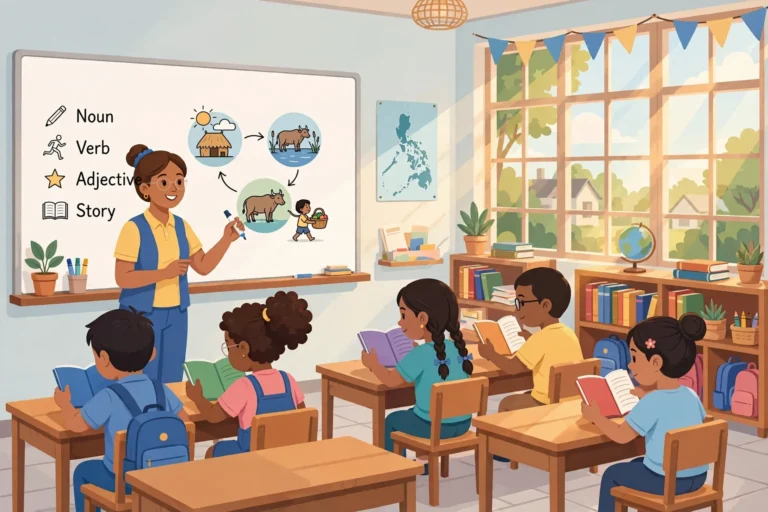
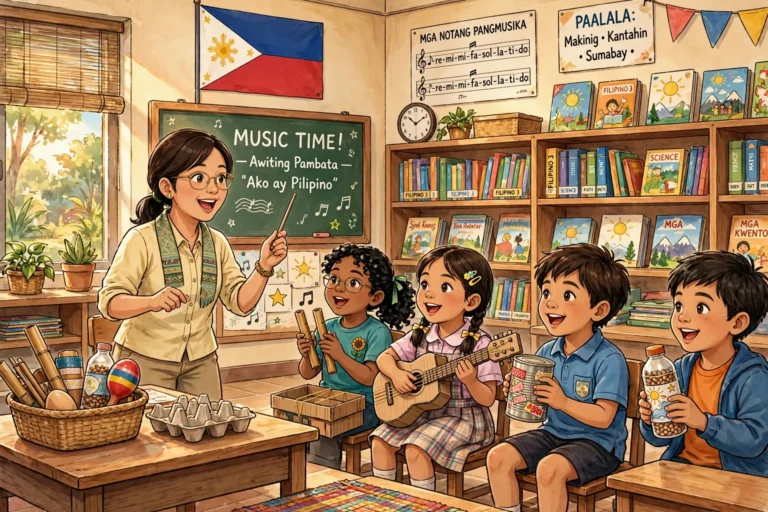
If you searched for a music and arts curriculum guide, here is the simple version: under the MATATAG Curriculum, Music and Arts is the creative half of MAPEH. It covers Grades 4 to 10. In this subject, students do not just read about art — they make it. They sing, play, act, dance, draw, paint, and build. And they learn mostly through Philippine art: local festivals, local stories, local materials, and the art of nearby Southeast Asian countries.
This guide explains what Music and Arts teaches, which grades take it, how much time it gets, how it is graded, and what students actually do in class — in plain words a Grade 8 student can follow. There is an activity finder tool and a free PDF at the end.
Download the free Music & Arts checklist (PDF)
Music & Arts Activity Finder (Tool)
Pick a grade band and an art focus. The tool will suggest one classroom activity, the skill it builds, and a local material you can use. Teachers can use it for lesson ideas; students can use it for projects.
What Is the Music and Arts Curriculum Guide?
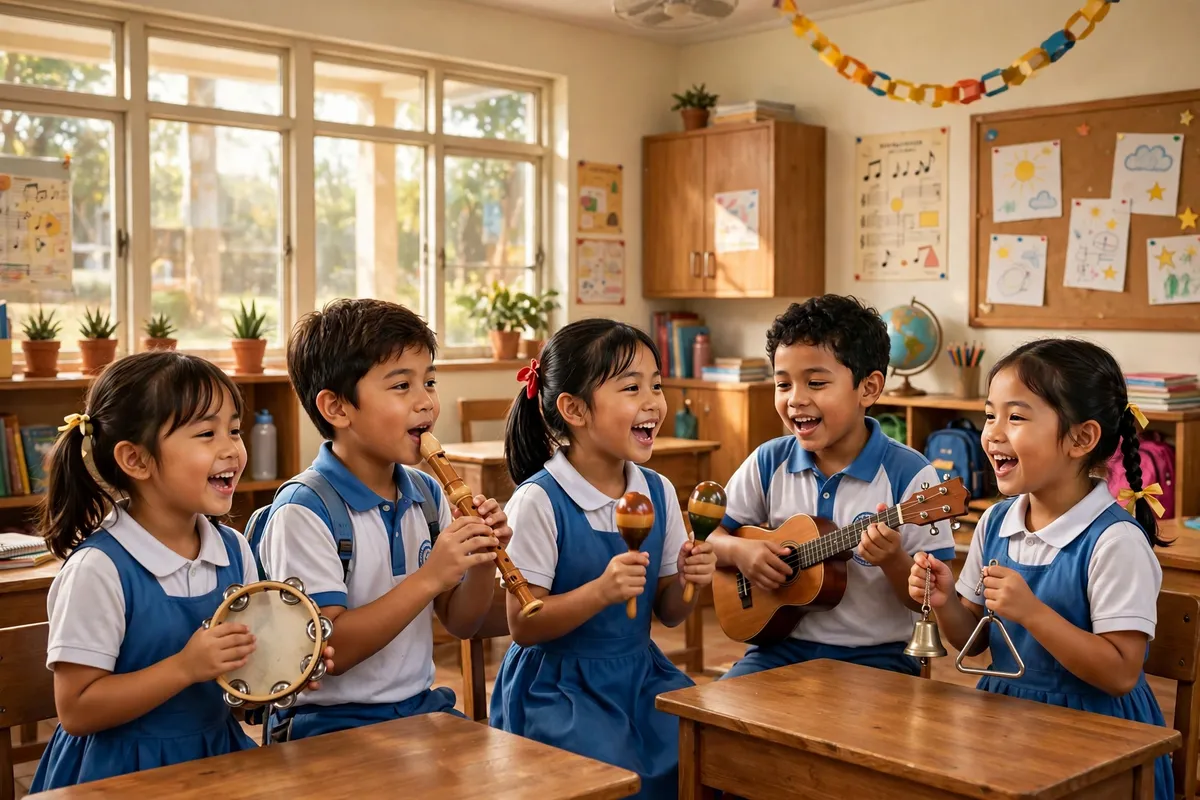
Think of Music and Arts as two kinds of art in one subject. Performing arts means art you perform: music, theater, and dance. Visual arts means art you see: drawing, painting, and sculpture. The MATATAG guide for Music and Arts (August 2023) covers Grades 4 to 10, and it joins the two together because in real life they often mix — a festival dance has music, costumes, and movement all at once.
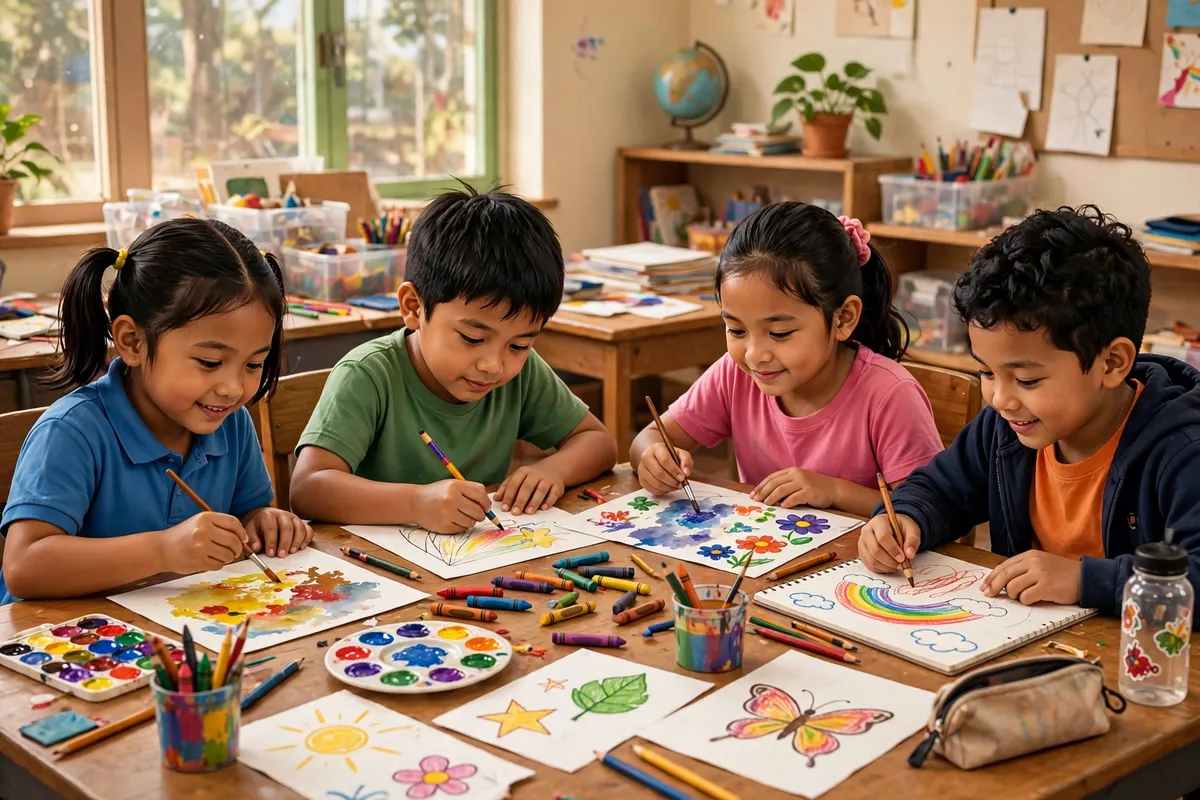
The big idea is simple: students learn art by doing art. Each quarter, the class studies a theme — for example, early Philippine art, or art from the Spanish colonial period — and then students create something of their own based on it. A class might make a modern version of a zarzuela (a Filipino musical play) or a short theater show based on a local story. The guide calls this “creative work,” and it is the heart of the subject.
Music and Arts does not start in Grade 4 out of nowhere. Younger children meet songs, dances, and drawing inside Makabansa and Kindergarten play. But Grade 4 is where Music and Arts becomes its own guide, with its own lessons and its own grade.
Music and Arts Inside MAPEH: How the Grade Works
Parents often get confused here, so let us make it clear. MAPEH stands for Music, Arts, Physical Education, and Health. But under MATATAG, MAPEH is graded as only two parts, not four:
| MAPEH Component | What It Covers |
|---|---|
| Music and Arts | Music, theater, dance, drawing, painting, sculpture |
| Physical Education and Health | Sports, games, fitness, health habits |
Each quarter, your child gets one grade for Music and Arts and one grade for PE and Health. The two grades are averaged to make the MAPEH grade for that quarter. So Music and Arts counts for half of MAPEH. If your child loves art but struggles in sports (or the other way around), this system is fairer than the old one, which graded four separate parts.
How Much Time Does Music and Arts Get?
MAPEH as a whole follows the same flexible schedule as other subjects under DepEd Order No. 012, s. 2024, which amended the original MATATAG order. Schools can choose one of three options:
| Option | How MAPEH Is Scheduled |
|---|---|
| Option A (original) | 45 minutes a day, 5 days a week |
| Option B (flexible) | 50, 55, or 60 minutes per session, 4 times a week |
| Option C (school proposal) | A mix the school proposes, as long as MAPEH gets at least 200 minutes a week |
In short: MAPEH gets about 200 to 225 minutes a week, shared between Music and Arts and PE and Health. The exact split depends on the school’s schedule. If you want the full weekly picture for every subject, see our MATATAG time allotment guide.
What Students Learn, Grade by Grade
The guide moves through time, like a story. Younger grades start with what is near — their own town and province. Older grades move outward — to the Philippines as a whole, then to Southeast Asia, then to the modern world. Here is the journey in simple form:
| Grade | What Students Explore | Example Work |
|---|---|---|
| Grade 4 | Art from their own province: local festivals, local stories, local art | Study a festival like Panagbenga; examine sound, dance, and visual design in it |
| Grade 5 | Early Philippine art, then art from the 1500s–1700s (Spanish colonial period) | Compare early and colonial art; create work using 17th–18th century styles |
| Grade 6 | Later periods and deeper skills in music, theater, dance, and visual art | Fuller productions: short plays, group dances, art exhibits |
| Grade 7 | Modern and emerging popular art of the Philippines and Southeast Asia | Create work inspired by today’s Filipino and Southeast Asian artists |
| Grades 8–10 | Deeper study of styles, techniques, and cultural influences across periods | Original productions and portfolios that show growth over time |
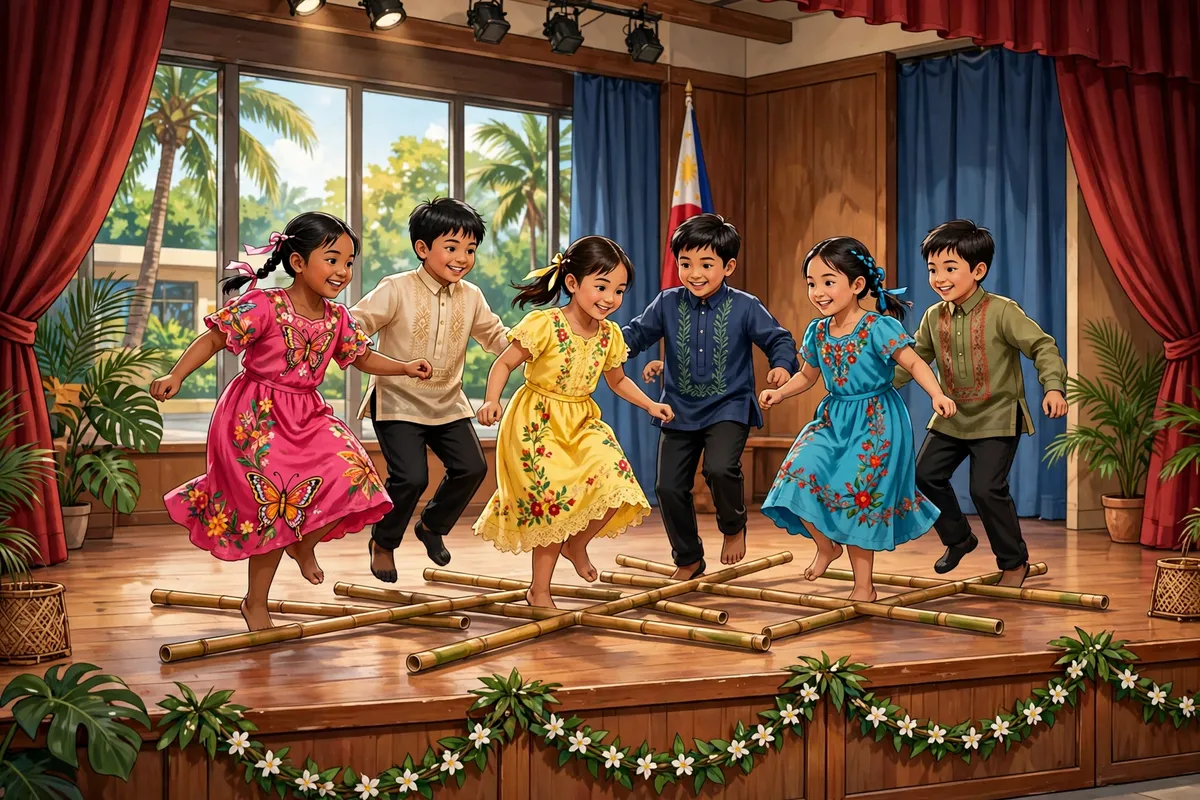
Across all grades, students practice the same kinds of skills, just at higher levels: listening, performing, creating, and judging art (called “critiquing”). In music, they learn ideas like harmony and intervals (how notes sound together). In theater, they learn acting styles, stage movement, and symbols. In dance, they learn dance forms and how to put movements together (choreography). In visual art, they learn subjects, themes, forms, styles, and design rules. And they use any local material they can find — natural or man-made — so no expensive supplies are needed.
How Students Are Assessed
Music and Arts is not graded by a written test alone. Teachers look at what students actually make and do. Two methods matter most:
- Creative work and performances. A song, a dance, a play, a painting, or a sculpture — judged on the skills the class practiced, not on being “talented.” Effort, understanding, and growth count.
- Portfolios. Students collect their best work over time — projects, artwork, photos of performances, short writings about their art. The portfolio shows growth, which a single test cannot.
This is good news for students who think they are “not artistic.” The subject rewards trying, practicing, and improving — not being born talented. A student who starts shy and ends the year performing with confidence has shown real learning.
Tips for Students and Parents
- Use what is around you. The guide itself says: any local material, natural or man-made. You do not need to buy anything fancy.
- Go to local festivals. Watching a real festival teaches more about art than a whole chapter. Ask: what music, dance, colors, and costumes do you see?
- Keep a portfolio at home. Photograph every artwork and performance. At the end of the year, the growth will surprise you.
- Practice out loud. Music, theater, and dance need rehearsal. Ten minutes of practice at home beats one rushed practice at school.
- Do not say “I can’t do art.” Art in this subject is a skill, not a gift. Skills grow with practice — that is the whole point of the class.
Frequently Asked Questions
What grades take Music and Arts?
Grades 4 to 10, under the MATATAG Music and Arts Curriculum Guide (August 2023). Younger children meet music and art inside Makabansa and Kindergarten play.
Is Music and Arts the same as MAPEH?
No. MAPEH has two parts: Music and Arts, and PE and Health. Each quarter, the two grades are averaged to make the MAPEH grade.
How much time does MAPEH get per week?
About 200 to 225 minutes a week, shared between Music and Arts and PE and Health, depending on the school’s schedule under DepEd Order No. 012, s. 2024.
Do students need expensive materials?
No. The guide encourages any available local material — natural or synthetic. Voice, body, paper, and recycled items are enough.
How is Music and Arts graded?
Through creative work, performances, and portfolios — not written tests alone. Growth and effort count.
What is a zarzuela?
A Filipino musical play — a story told with acting, singing, and music. Classes sometimes create a modern version as a project.
Conclusion
Music and Arts under MATATAG is simple at heart: from Grade 4 to Grade 10, students learn Philippine art by making Philippine art — singing, acting, dancing, drawing, and building, starting from their own town and growing outward to Southeast Asia and the modern world. It counts for half of MAPEH, it is graded on real work and portfolios, and it needs no expensive materials — just local ones and a willingness to try.
Grab the free PDF below for the grade-by-grade guide and activity ideas in one printable page. For the full MAPEH picture, read our MAPEH curriculum guide, and for the complete subject picture start at the MATATAG Curriculum. You can also read the official Music and Arts Curriculum Guide (Grades 4–10) document itself here (PDF).
Sources & References
- DepEd MATATAG Curriculum: Music and Arts (Grades 4–10), August 2023
- DepEd Order No. 012, s. 2024 — Amendment to DepEd Order No. 010, s. 2024 (flexible time allotment)
- DepEd Order No. 010, s. 2024 — Policy Guidelines on the Implementation of the MATATAG Curriculum