GMRC Curriculum Guide: What It Teaches in Grades 1-6 (2026)
If you searched for a gmrc curriculum guide, here is the one-sentence version: GMRC — Good Manners and Right Conduct — is the values subject every Filipino learner takes as a separate subject from Grades 1 to 6. It is not an extra or a homeroom add-on. It is a real subject with the same time allotment as Math and English, created by law, and it replaced the old Edukasyon sa Pagpapakatao.
Parents and teachers ask about GMRC constantly, because it is the subject where report cards meet character: manners, honesty, respect, discipline, love of country. This guide explains what GMRC actually teaches, the law behind it, how it is taught, how much time it gets, how it differs from Values Education in high school, and includes a grade checker tool and a free PDF.

GMRC or Values Ed? Grade Checker (Tool)
Pick a grade and see instantly which values subject applies, and in what form.
What Is GMRC?
GMRC stands for Good Manners and Right Conduct. In plain language, it is the subject that teaches children how to behave well and choose right: respecting elders, telling the truth, caring for others, following rules, and loving their country. DepEd describes its heart as human dignity, respect for oneself, and giving oneself to others in the spirit of community — with the goal of building a child’s decision-making skills, not just memorizing rules.
GMRC is built on DepEd’s four core values, which every Filipino learner hears from kindergarten onward: Maka-Diyos (God-fearing), Maka-tao (people-centered), Makakalikasan (nature-friendly), and Makabansa (patriotic). The GMRC curriculum turns those big values into small, concrete lessons a Grade 1 or Grade 4 learner can actually practice: saying “po” and “opo,” waiting for one’s turn, returning a lost pencil, telling the teacher the truth even when it is uncomfortable, keeping the classroom clean.
The law behind it is Republic Act No. 11476, the GMRC and Values Education Act, signed on June 25, 2020. That law did two things at once: it created GMRC for Grades 1 to 6 and Values Education for Grades 7 to 10, and it retired Edukasyon sa Pagpapakatao (EsP) as a standalone subject. If you grew up with EsP, GMRC is its successor — same mission, new structure, and now a separate subject with its own time slot instead of being folded into other lessons.
What the Law Requires (RA 11476)
The law is unusually specific about how GMRC must be taught, which is good news for teachers looking for guidance. Three requirements matter most:
- A separate subject, Grades 1 to 6. GMRC is taught as its own subject with the same time allotment as the other core subjects — not as a 10-minute add-on to another class. In kindergarten, GMRC is integrated into daily learning activities and play instead of being a separate subject.
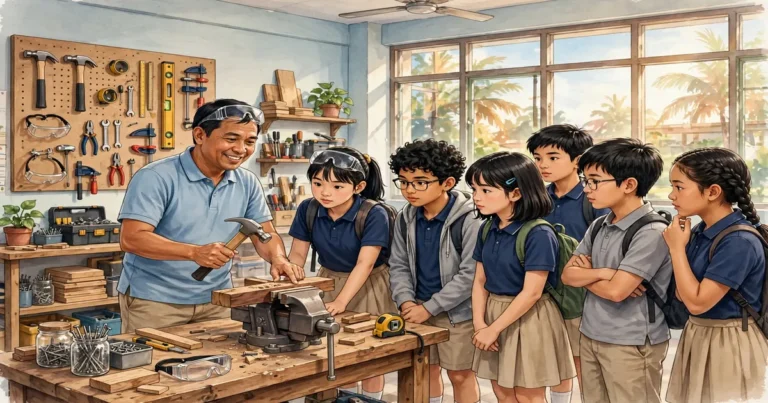
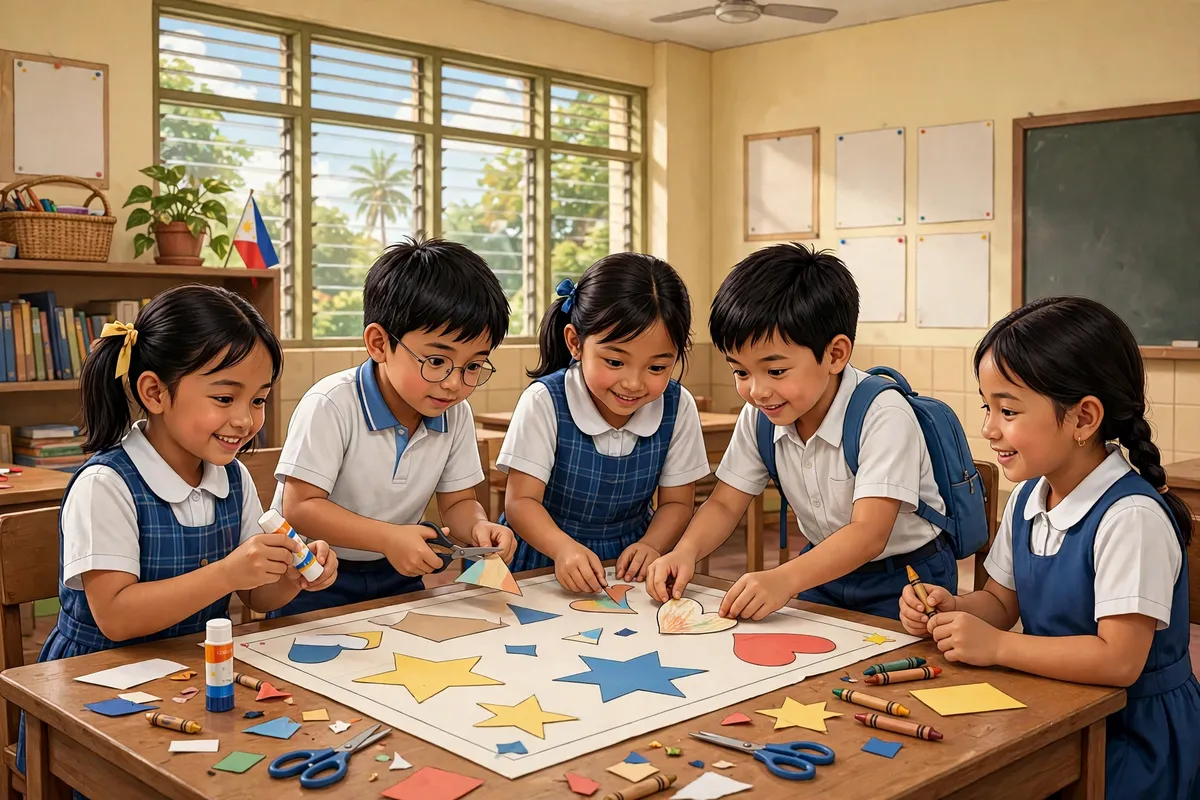
- Character-building activities, not lectures. DepEd is required to introduce GMRC through clear, distinct, specific, and concrete activities: role playing in the classroom, community immersion activities, teacher-parent collaborative learning activities, school-initiated values formation activities, simulated activities, and other forms of experiential learning. A GMRC lesson should look like children doing something, not children copying notes about goodness.
- Specific tenets. The curriculum must focus on caring for oneself, giving concern for others, according proper respect to people, upholding discipline and order, cultivating sincerity, honesty, and obedience, and above all, love for country.
DepEd is also required to train teachers for GMRC and provide adequate instructional materials, and to assess implementation and report to Congress. In other words, GMRC is not a suggestion. It is a monitored, funded part of the curriculum.
What the GMRC Curriculum Guide Teaches: Core Values in Practice
GMRC lessons are organized around values children can practice at home and school the same day. The law’s list of tenets gives teachers the spine of the subject:
| GMRC Tenet | What It Looks Like in a Child’s Day |
|---|---|
| Caring for oneself | Personal hygiene, healthy habits, keeping one’s things in order, safety awareness |
| Giving concern for others | Helping a classmate, sharing, comforting someone who is sad, community care |
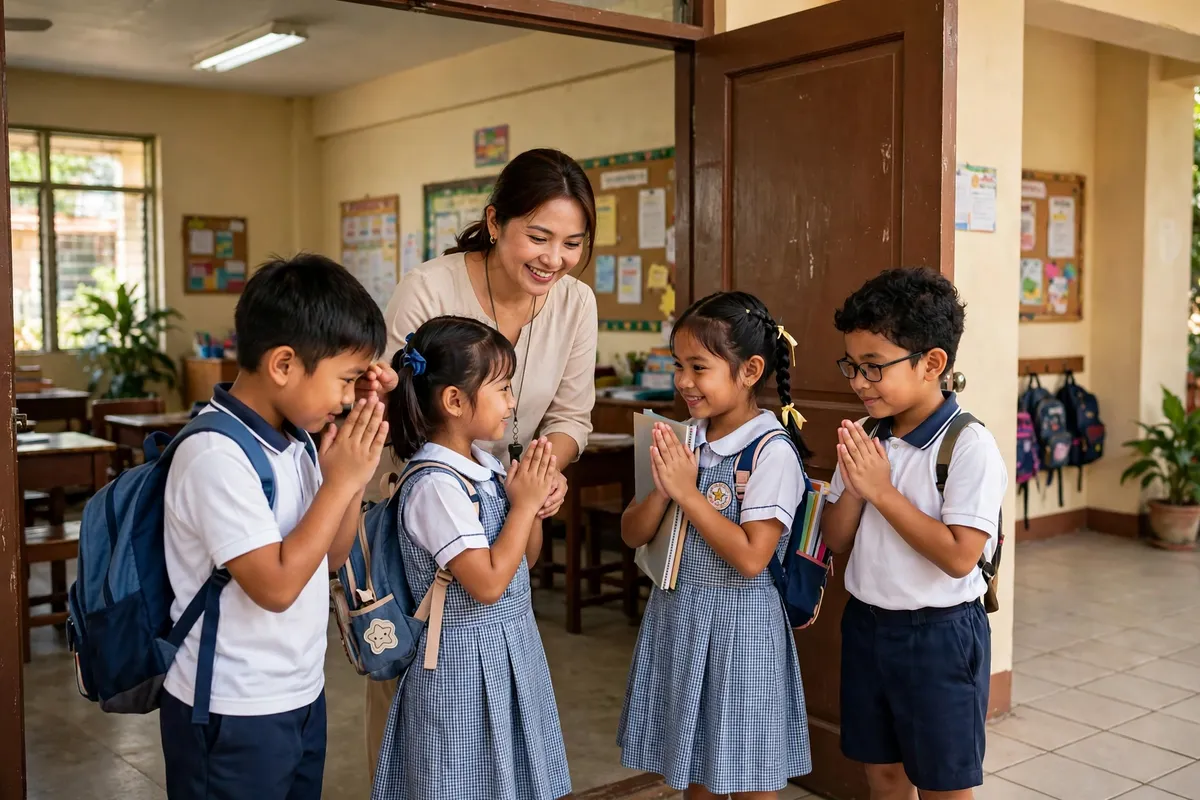
| Proper respect for people | Greeting elders with “po” and “opo,” listening when others speak, polite language |
| Discipline and order | Following classroom rules, lining up, finishing tasks on time, obeying school rules |
| Sincerity and honesty | Telling the truth, admitting mistakes, doing one’s own work, keeping promises |
| Obedience | Following parents’ and teachers’ rightful instructions, respecting lawful authority |
| Love for country | Respecting the flag and national symbols, caring for the community, pride in being Filipino |
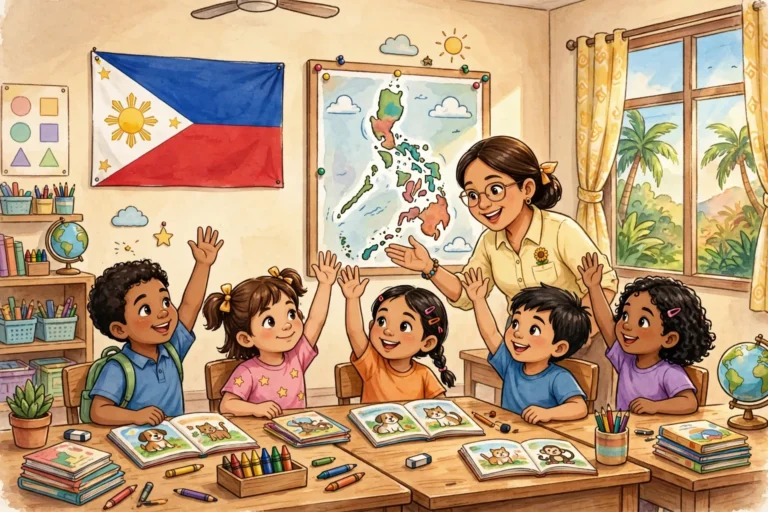
This is the heart of the gmrc curriculum guide: across Grades 1 to 6, the same values return at deeper levels. A Grade 1 lesson on respect might be greeting the teacher properly. A Grade 6 lesson on respect might be resolving a disagreement without insults, or standing up for a bullied classmate. The values do not change; the situations get realer. That spiral — same values, harder situations — is how character subjects are supposed to work, and it is why GMRC runs for six years instead of one.
GMRC Time Allotment
Because GMRC is a core subject by law, it gets core-subject time — the same allotment as subjects like Math and English in the same grade. In Grades 4 to 6 under the MATATAG time allotment, core subjects run 45 minutes a day, five days a week, or 225 minutes per week, and GMRC sits in that same band (DepEd’s minimums likewise put GMRC at no less than 225 minutes per week in those grades). In Grades 1 to 3, GMRC follows the grade’s core-subject schedule for that level.
That time matters for planning. A teacher with a full GMRC period can run a real role play, a community activity, or a values formation session. A teacher with only a few borrowed minutes cannot — which is exactly why the law made GMRC a separate subject instead of leaving values to chance across other lessons. If your school’s class program squeezes GMRC into a corner, the law is on your side: GMRC deserves the same slot as the other core subjects.
GMRC vs Values Education: The Full Picture
The most common confusion about GMRC is its relationship with Values Education. They are siblings, not synonyms — created by the same law, for different grade levels:
| GMRC | Values Education | |
|---|---|---|
| Grades | Grades 1 to 6 | Grades 7 to 10 |
| Format | Separate subject | Separate subject |
| Focus | Good manners and right conduct: concrete behavior, habits, basic tenets | Deeper values work: ethical and moral reasoning, cultural diversity, peace, global citizenship |
| GMRC inside it? | — | Yes — GMRC remains integrated in Values Education in Grades 7 to 10 |
| Kindergarten / SHS | Integrated into kindergarten daily activities | Integrated across subjects in Grades 11 to 12 (no separate subject) |
So the full journey is: kindergarten gets GMRC woven into play and routines; Grades 1 to 6 get GMRC as a subject; Grades 7 to 10 get Values Education as a subject with GMRC inside it; Grades 11 to 12 get values integrated across all subjects. If you want the detailed side-by-side — including where the two subjects overlap and where they genuinely differ — read our GMRC vs Values Education comparison.
How GMRC Is Taught (and How It Should Not Be)
The law’s teaching list is a checklist for any GMRC lesson. A strong GMRC lesson uses at least one of these: role playing in the classroom, community immersion, teacher-parent collaborative activities, school-initiated values formation, simulated activities, or another form of experiential learning. The child does something — acts out returning a lost wallet, cleans a corner of the school, writes a thank-you note — and then reflects on what the right choice was and why.
What GMRC should not be: a lecture copied from a textbook, a list of rules to memorize for a quiz, or a period borrowed for another subject’s backlog. Values are caught more than taught, and a GMRC period spent silently copying “honesty is the best policy” ten times teaches obedience to a task, not honesty. Parents can spot the difference quickly: ask your child what they DID in GMRC this week. If the answer is an activity, the subject is working. If the answer is “we copied notes,” raise it with the teacher — kindly, and with the law’s activity list in hand.
Planning a GMRC lesson? Our MATATAG lesson plan guide shows the current lesson format, which works for GMRC as well as any other subject — objectives, activities, and assessment, all aligned.
Tips for Teachers and Parents
- Teachers: lead with an activity. Start the period with a role play or a real situation, then name the value. Values land harder when children feel them first.
- Teachers: protect the period. GMRC has core-subject time by law. Do not let it become the period other subjects borrow from.
- Parents: reinforce at home. The same values — honesty, respect, discipline — need the same language at home and school. Ask about the week’s GMRC activity and repeat it at home.
- Parents: model, don’t lecture. Children copy what adults do far more than what adults say. A parent who returns wrong change teaches more GMRC than a week of reminders.
- Everyone: use the grade checker above. Before arguing about whether a child “has GMRC,” check the grade — kindergarten, Grades 1-6, Grades 7-10, and SHS all handle values differently.
Frequently Asked Questions
What does GMRC stand for?
Good Manners and Right Conduct — the values subject taught as a separate subject in Grades 1 to 6 under Republic Act No. 11476.
Is GMRC a separate subject?
Yes, in Grades 1 to 6, with the same time allotment as the other core subjects. In kindergarten it is integrated into daily activities, not a separate subject.
What is the difference between GMRC and Values Education?
GMRC (Grades 1-6) focuses on good manners and right conduct — concrete behavior and habits. Values Education (Grades 7-10) goes deeper into ethical reasoning, diversity, peace, and citizenship, with GMRC integrated inside it. In Grades 11-12, values are integrated across all subjects.
Did GMRC replace Edukasyon sa Pagpapakatao (EsP)?
Yes. RA 11476 replaced the EsP curriculum with GMRC (Grades 1-6) and Values Education (Grades 7-10).
How much time does GMRC get per week?
The same as other core subjects. In Grades 4 to 6 that means 45 minutes a day, five days a week (225 minutes per week); Grades 1 to 3 follow their grade’s core-subject schedule.
How is GMRC taught?
Through character-building activities: role playing, community immersion, teacher-parent collaborative activities, school-initiated values formation, simulated activities, and other experiential learning — not through lectures alone.
Conclusion
GMRC is a small subject with a large job: six years of teaching Filipino children how to behave well and choose right, with the full weight of a law behind it. It runs as a separate subject in Grades 1 to 6, builds on the same tenets year after year — respect, honesty, discipline, obedience, love of country — and hands over to Values Education in Grade 7, which carries those values deeper into adolescence.
If you are a teacher, protect the period and lead with activities. If you are a parent, reinforce the same values at home and ask what your child did in GMRC this week. And if you want the grade-by-grade picture and a planning checklist in one printable page, grab the free PDF below. For the complete subject picture across all grades, start at the MATATAG Curriculums homepage and follow the guides from there.
Sources & References
- Republic Act No. 11476 — GMRC and Values Education Act (signed June 25, 2020), and its Implementing Rules and Regulations
- Chan Robles — IRR of Republic Act No. 11476
- DepEd Order No. 010, s. 2024 — Policy Guidelines on the Implementation of the MATATAG Curriculum