How to Make a MATATAG Lesson Plan: A Step-by-Step Guide (2026)
Sunday night. Papers unmarked. Tomorrow’s lesson plan? Blank.
And now there’s a new problem on top of the old one — the format you’ve used for years might not even be the right one anymore. DLL? DLP? Or this new thing everyone’s talking about?
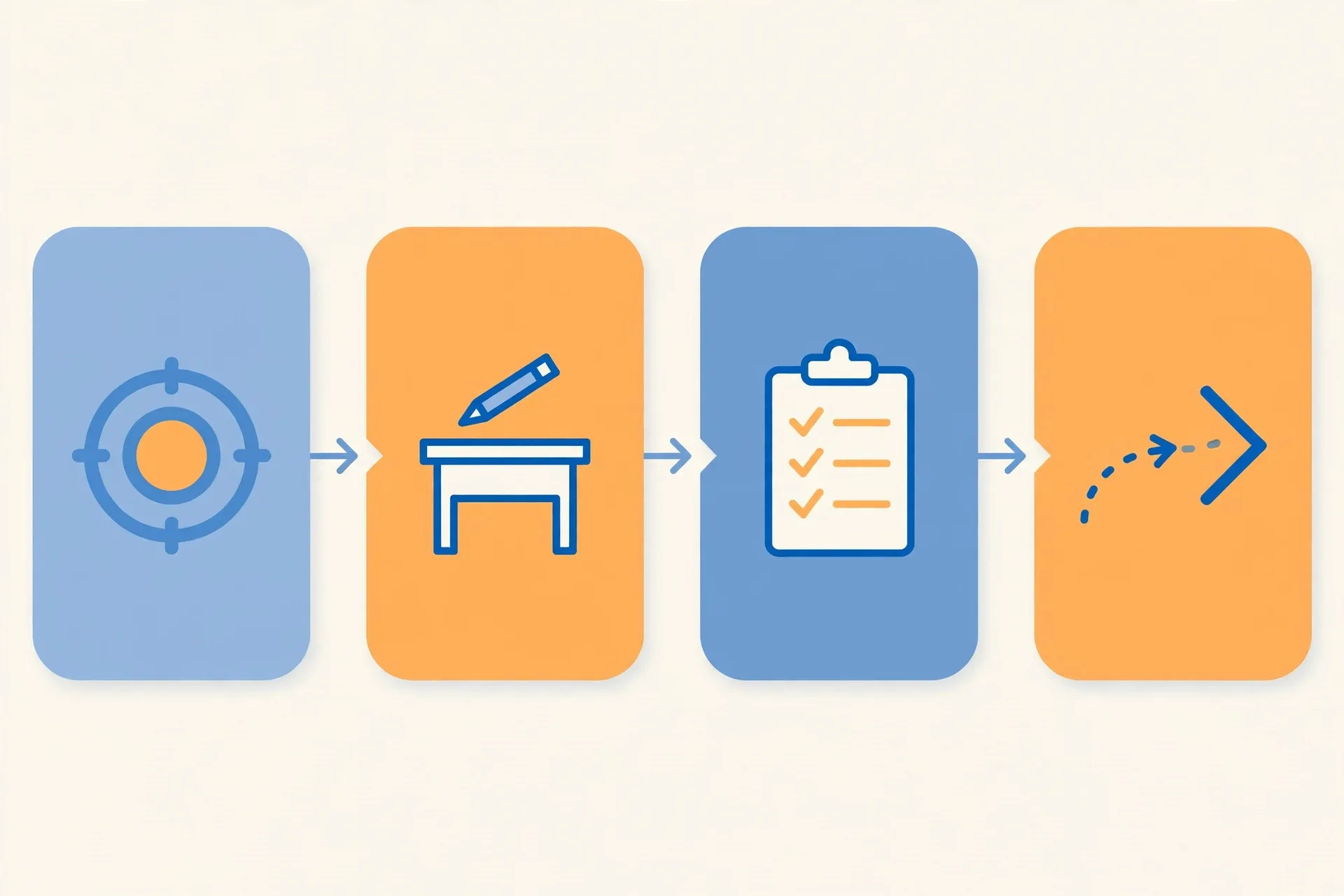
Deep breath. Here’s the deal: DepEd Order No. 16, s. 2026 scrapped the old templates and replaced them with the ILAW framework. Four parts. That’s the whole thing — Intentions, Learning Experience, Assessing Learning, Ways Forward.
Honestly? It’s simpler than what came before. This guide walks you through building a real lesson plan around those four parts — what goes where, a full example you can borrow from, a blank template, and the mistakes observers flag most. Let’s get into it.
If that’s you, keep reading — by the end of this guide, you’ll know exactly how to make a MATATAG lesson plan from a blank page to a finished, observer-ready draft.
What Actually Changed (and What Didn’t)
Some context first — it helps.
For roughly ten years, lesson planning meant one of two things: the Daily Lesson Log or the Detailed Lesson Plan, both under DepEd Order No. 42, s. 2016. You know the drill. Long templates. Boxes that didn’t quite fit. Sections you’d fill in because they were there, not because they helped you teach.
Then MATATAG came along — fewer competencies, less congestion, more focus on actual mastery. And suddenly the old planning format felt… off. Like wearing shoes a size too small. (If you want the bigger picture of how the rollout works, our DepEd Order 010 explainer breaks it down.)
So in June 2026, DepEd issued Order No. 16, s. 2026 — new Guidelines on Lesson Planning and Learning Design. Out with the rigid DLL/DLP. In with ILAW:
| Part | What It Means | What You Write |
|---|---|---|
| I — Intentions | What should they be able to do after this? | Competency, standards, 2–4 observable objectives, your learners’ profile |
| L — Learning Experience | How will the lesson run? | Opening hook, main flow, materials, real connections |
| A — Assessing Learning | How will you know it worked? | Checks during class, rubrics, support for strugglers |
| W — Ways Forward | Then what? | Follow-up tasks, remediation/enrichment, your reflection |
Now — three things people get confused about. Let’s clear them up.
There’s no official template. Read that again. The order gives you a framework, not a form. If your school has its own format, use it — as long as the four ILAW parts are in there somewhere. Anyone telling you there’s one “correct” national layout? They’re wrong.
It’s phased in. Term 1 of SY 2026–2027 is transition. Your division might still accept the old formats for now. Full ILAW by Term 2. Don’t guess — ask your coordinator what your school’s doing.
On AI: DepEd’s line is simple. Use it to brainstorm, draft materials, generate practice items — fine. But the teaching decisions? Yours. An AI can list ten motivation activities in three seconds. It can’t tell you which one works with your 2nd-period class on a rainy Monday. That’s your call. Fully AI-written plans aren’t allowed anyway.
4 Things to Grab Before You Write a Word
Here’s something nobody tells new teachers: most bad plans aren’t badly written. They’re badly started. The teacher sat down to write before gathering the inputs. Don’t do that. Get these four things first — the writing part goes fast after.
1. The competency. Exact words, code included.
Open your MATATAG curriculum guide. Find your grade, your subject. Copy the competency verbatim. And here’s the hard rule: one lesson, one competency. I know the temptation — you’re behind, so why not cover two? Because a plan chasing two targets hits neither. Pick one. Commit.
2. Its content and performance standards.
Every competency comes with a pair: content standard (what they should understand) and performance standard (what they should produce or do). Your objectives grow from these. Not from the activity you saw on Facebook. From the standards.
3. Your actual schedule.
What week are you on? How many minutes do you really have — after latecomers, announcements, the works? A 50-minute English class and a 100-minute TLE block need completely different plans. Check your subject’s MATATAG time allotment, then plan for real minutes, not paper minutes.
4. Who’s actually in your room.
ILAW wants learner context. This isn’t filler — it changes your plan. How many read below level? Any learners with disabilities? Chronic absentees? Write for the real kids in front of you, not some imaginary average class. The “average class” doesn’t exist.
How to Make a MATATAG Lesson Plan in 5 Steps
Step 1: Slice the competency until it fits one period
Start with the guide, not with an activity idea. Find the competency your budget of work says is next.
Then ask: what should a learner be able to do at the end of this lesson that they couldn’t do at the start?
Can’t answer in one sentence? Too big. Slice it thinner.
“Use adjectives to describe people, places, and things” — one period, maybe two. Fine. “Demonstrate understanding of the parts of speech” — that’s a week. Don’t lie to yourself about this. Everything downstream breaks if you get it wrong here.
Step 2: Write objectives you could watch happen
The test is simple. Can you picture a learner doing it?
“Appreciate adjectives” — picture that. Go ahead, try. You can’t. It’s not an objective, it’s a greeting card.
“Underline the adjectives in five sentences with 80% accuracy” — that you can see. That’s an objective.
Two to four of them. Cover three angles if you can: something they’ll know, something they’ll do, and — where it fits — something about how they’ll behave (listening respectfully in pair work counts).
And keep the numbers honest. Five objectives for 45 minutes? Fantasy. Three good ones win every time.
A few examples so the pattern clicks:
- Math, Grade 3: “Solve 8 of 10 two-digit addition problems with regrouping in 15 minutes.” Not “understand addition.”
- Science, Grade 5: “Sort 10 household items into solid, liquid, or gas — and explain one choice to a partner.” Not “learn about matter.”
- Filipino, Grade 2: “Read a 4-sentence paragraph aloud, pronouncing at least 90% of words correctly.” Not “improve reading.”
Notice something? Each one names a thing you could point at and say “yes, that happened” or “no, it didn’t.” That’s the whole trick.
Step 3: Build the lesson in three movements
Think of it like music. Opening. Main section. Close.
Opening — 10 to 15% of your time. Wake them up. A riddle on the board. A weird photo. A two-minute drill. A question they actually want to answer. This isn’t decoration — a strong hook buys you the whole period. No hook? You’re fighting for attention for the next fifty minutes. Your choice.
Main flow — 65 to 70%. Teach, then guide, then let go. Explain it briefly. Show them. Let them try with you. Then let them try alone. I-do, we-do, you-do — old as dirt, still works better than anything else.
One MATATAG-specific note: use materials from their world. A worksheet about snow in a classroom where it’s 34°C? Dead on arrival. What’s outside their window? Use that.
Integration — a sentence or two. Where does this honestly connect to values, another subject, real life? Keep it true. One real sentence beats a paragraph of forced nonsense. If the link isn’t there, don’t fake it.
| Part | Time | Job |
|---|---|---|
| Pre-lesson | ~10–15% | Hook them, activate prior knowledge |
| Lesson flow | ~65–70% | Teach → guide → independent work |
| Wrap-up | ~15–20% | Check, generalize, close |
Practical rule of thumb: write it so a substitute could run your class from the page. Each activity gets three details — what learners do, how long, what they need. If your “flow” is just a list of activity names, it’s not done yet.
Step 4: Plan assessment as you plan the teaching
Most teachers do this backwards. They design the whole lesson, then tack on a quiz at the end like a bumper sticker.
Don’t. As you plan each chunk, ask: how will I know this part worked?
Exit ticket on a scrap of paper. A checklist you carry during pair work. Five quick questions. A dead-simple rubric. Whatever fits — but here’s the non-negotiable part: the tool has to match the target. Speaking objective with a written test? Useless. Group poster to check individual learning? Tells you nothing about who actually learned. Sounds obvious. Gets missed constantly.
And figure out accommodations now. Kid can’t finish the written task in time — what’s their other route to show the same learning? Oral answer? Labeled drawing? Decide before class, not during. That’s what makes a classroom inclusive instead of just hopeful.
Step 5: Ways Forward — both halves, not just one
Two halves here. Teachers remember the first, skip the second. Don’t skip the second.
Half one: the learners. What’s next for them? Home task. A question to investigate. Remediation — name who’s in, when, doing what. (“Learners below 80% join tomorrow’s 15-minute pull-out” is a plan. “Remediation as needed” is wallpaper.) Enrichment for the fast finishers so they’re not just sitting there.
Half two: you. The reflection. Three honest sentences — what worked, what flopped, what changes tomorrow. Highest-value three minutes in your week. Most-skipped three minutes in your week. Funny how that works.
Observers can smell a fake reflection instantly. And beyond observations — by week three, you’ll feel the difference yourself. You stop making the same mistake twice. That’s the whole game.

Full Example: Grade 4 English, 60 Minutes
Enough theory. Here’s a finished plan — steal the structure freely. (Prefer a downloadable file? Our MATATAG lesson plan PDF guide has ready-made templates you can print.)
I. INTENTIONS
Competency: Use adjectives to describe people, places, and things.
Objectives: By the end, learners will: (1) pick out adjectives in given sentences at 80% accuracy or better; (2) write three original sentences — one about a classmate, one about a place in school, one about an object — each with at least one adjective; (3) listen and give feedback respectfully during pair work.
Learner context: 38 kids. Six read below grade level — they get a picture word bank. One has low vision, sits near the board, gets large-print handouts.
L. LEARNING EXPERIENCE
Pre-lesson, 8 min: Put up a photo of the school canteen. “What do you see?” Hands shoot up. Circle every describing word on the board as they say them. Then: “Today we learn what those words are called — and how to use them ourselves.”
Flow, 40 min: Teach — five examples straight from the photo. Big gate. Noisy canteen. Clean tables. They chorally call out the adjectives. Guided — pairs get sentence strips and picture cards, match them, underline the adjectives. You walk around with a checklist, noting who’s solid and who’s guessing. Solo — everyone writes their three sentences. One per topic. Adjective in each.
Integration: GMRC angle — choosing kind, respectful words when describing a classmate. Real-life angle — describing a lost item precisely enough that someone can find it.
A. ASSESSING LEARNING
During: the checklist. After: the three sentences, scored 1–3 on adjective use, completeness, spelling. Struggling readers use the picture bank. Low-vision learner gets the enlarged sheet. Last two minutes — exit ticket: “One adjective for today’s weather. Go.” Collect at the door. Thirty seconds scanning the pile tells you if it landed.
W. WAYS FORWARD
Home: find five objects, one adjective each, notebook. Remediation: below 80% → 15-minute pull-out tomorrow with the picture cards. Enrichment: four-line poem, six adjectives minimum, for the fast ones.
Reflection — written after, honestly: “Pair work ran five minutes over. Cut one card next time. The canteen photo hooked them instantly — more local photos. Three kids still confuse adjectives with verbs. Re-teach tomorrow, contrast with action words.”
Look at what’s not in there. No pasted boilerplate. No unobservable objectives. No activity that exists to fill space. Every line earns its place.
What Observers Really Check
Let’s be blunt. Most teachers write plans with one eye on the observer. Fine. Here’s what they’re actually looking at — it’s not your fonts.
Alignment. The big one. Do your activities build toward your objectives? Does your assessment measure them? An experienced observer spots misalignment in about a minute and a half. Objectives about speaking, activities about writing, quiz about neither — dead on arrival. Everything points one direction, or nothing does.
Do you know your kids? The learner context section isn’t decoration. If it says “6 below grade level” and your lesson treats all 38 identically — that’s a problem, and they see it. Even one line of differentiated support changes the read completely.
Checking during, not just after. Anyone can give a quiz at the end. Observers want to see you monitoring mid-lesson and adjusting. Put those moments in the plan: “after guided practice, cold-call 3 learners to explain before moving on.” One line. Tells them you’re teaching humans, not delivering content.
A reflection with a pulse. “The lesson was successful. Learners participated actively.” — that’s a pulse of zero. Compare: “ran five minutes over, cut a card next time.” Which teacher would you trust with your kid? Exactly.
Blank Template — Copy and Fill In
One page. Fill it top to bottom. Done.
- Class: Grade ___ | Subject ___ | Date ___ | Time ___ | Term ___
- I. INTENTIONS
- Competency (exact words + code):
- Content standard:
- Performance standard:
- Objectives — 2 to 4, observable:
- Learner context — levels, needs, who’s struggling:
- L. LEARNING EXPERIENCE
- Opener — hook + purpose (minutes):
- Flow — teach → guided → solo (minutes each):
- Materials:
- Integration — one honest sentence:
- A. ASSESSING LEARNING
- Checks during the lesson:
- Rubric or tool for the output:
- Accommodations — who gets what:
- W. WAYS FORWARD
- Extension:
- Remediation — who, when, how:
- Enrichment:
- Reflection — after class, no faking:

Free Download: MATATAG Lesson Plan PDF
Want something you can print and keep on your desk? We’ve put together a free PDF with MATATAG lesson plan examples and templates — handy when you’re planning on the go or need a quick reference during a busy week.
For the full collection of free lesson plan files and exemplars, see our MATATAG Curriculum Lesson Plan PDF guide.
7 Mistakes That Get Flagged
Ask any master teacher. Same list, every time. Check yours against it.
1. Objectives you can’t observe. “Understand adjectives.” “Appreciate teamwork.” Pretty words, zero meaning. If you can’t say what the learner will do, it’s not done. Most common finding in observations. Most avoidable.
2. Picking the activity first. Saw a fun game online. Now reverse-engineering a competency to justify it. Result: an entertaining lesson that teaches nothing in particular. Competency first — the fun fits in after, there’s always room once the target’s clear.
3. One activity, whole period. Sixty minutes of the same thing. Fast kids check out, slow kids drown, middle kids fade. Mix it up — teacher-led, pairs, solo. The energy shift alone is worth it.
4. Wrong tool for the target. Speaking goal, written quiz. Individual goal, group output. Happens when you grab whatever assessment is handy. Two extra minutes of thought fixes it.
5. Blank accommodations. “None.” That one word announces you didn’t think about your strugglers. Every class has them. Word bank. Extra time. Oral option. One line — that’s the whole ask.
6. Fake integration. “This math lesson integrates music because counting has rhythm.” Nobody buys it. One true sentence beats a paragraph of fiction. No real connection? Say so. Honesty scores higher than creativity here.
7. The empty reflection. Blank box. Or the classic copy-paste: “The lesson was a success.” A plan without honest reflection is a plan you’ll repeat verbatim next year — flaws included. Three real sentences. Cheapest PD you’ll ever get.
Questions Teachers Keep Asking
DLL or DLP — still a thing?
They’re the old system (Order No. 42, s. 2016). The new order replaces them with ILAW’s four parts. But — check your division. The phase-in runs through SY 2026–2027, and yours might still accept old formats in Term 1.
Is there one official template?
No. Most misunderstood part of the whole policy. Framework, not form. Your school may hand you a format — use it. But there’s no single national layout to hunt down. Stop looking for it.
Where are the competencies?
MATATAG curriculum guides, per subject per grade. Your school has them. Work from your budget of work, copy competencies exactly — code and all. Paraphrasing is how drift starts; by March you’re teaching something adjacent to what was intended.
How long should the plan be?
Long enough for a colleague to teach from it cold. That’s the test. New teachers: more detail. Veterans: leaner is fine. A tight two pages beats a padded five every single time.
Can AI help?
Brainstorming, drafting materials, practice items — sure. Making the actual calls about what your learners need? That’s you. Also practically: AI doesn’t know your 2nd period melts down after lunch. You do.
All grades and subjects?
Yes — K to 10, everything. Same four parts, different insides. Grade 1 and Grade 10 both have Intentions; what fills them looks nothing alike. Structure transfers, content doesn’t.
My division hasn’t said anything about the transition. Now what?
Ask them. This week. Email, message, knock on a door — whatever works. Don’t wait until observation day to discover you used the wrong format. Most divisions have at least an interim memo floating around; it just doesn’t always reach every classroom.
Conclusion
One paragraph version: pick one real competency. Turn it into things you can watch happen. Build a lesson your actual learners can follow. Check mid-way if it’s working. Write down what happened, honestly.
That’s ILAW. That’s the job. The framework didn’t add work — it cleared the clutter around the work. The teachers who thrive won’t be the ones with the prettiest templates. They’ll be the ones who know their kids, plan with intent, and tell the truth in the reflection box.
That was true before, too. Now the paperwork finally matches.
Looking for more practical MATATAG guides — class programs, time allotments, DepEd order explainers? Browse the homepage for the full collection.
Sources & References
- DepEd Order No. 16, s. 2026 — Guidelines on Lesson Planning and Learning Design
- DepEd Order No. 42, s. 2016 — Policy Guidelines on Daily Lesson Preparation
- MATATAG K–10 Curriculum Guides, Department of Education (per learning area and grade level)
- MATATAG Curriculum Lesson Plan PDF Download — ready-made lesson plan files
- MATATAG Curriculum Time Allotment Per Subject (K–10) — match your plan to your subject’s minutes
- DepEd Order 010 s. 2024 Explained — the implementation policy behind MATATAG