What is the Medium of Teaching and Learning in the MATATAG Curriculum?
Picture the most awkward faculty meeting teachers talk about — and the confusion around the MATATAG medium of teaching and learning that caused it.
Take a typical principal in Cebu — call her Mrs. Reyes — addressing her teachers at the start of the year: “Starting this school year, no more Bisaya in the classroom. English and Filipino only. If I hear mother tongue, that’s a violation.”
Half the room would go pale. One brave Grade 1 teacher might raise her hand. “Ma’am… what about when a five-year-old is crying because she doesn’t understand a single word?”
Silence.
A principal like Mrs. Reyes would be wrong, by the way. Not about the policy changing — that part’s real. But about what the change actually means. And honestly? She’s not alone. Countless teachers, principals, and yes, parents are confused about what language they’re supposed to use in a MATATAG classroom right now.
So let’s sort it out. Properly. No legalese, no DepEd-speak. Just: what are the rules, why did they change, and what do you actually do on Monday morning.
Table of Contents
- First, What Are We Even Talking About?
- The Backstory (90 Seconds, I Promise)
- What the Current Rules Say About the MATATAG Medium of Teaching and Learning
- Kinder & Grade 1: Where It Gets Real
- Grades 2–3: The Transition Zone
- Grades 4–6: No More Ambiguity
- Grades 7–10: The Academic Push
- What Translanguaging Actually Looks Like (A Real Example)
- Scripts That Actually Work (Steal These)
- Your First-Week Action Plan
- Mistakes I Keep Seeing (Don’t Be These Schools)
- The Hard Parts (Let’s Be Honest)
- Practical Tips That Actually Work
- A Note for Parents Reading This
- Frequently Asked Questions
- The Bottom Line
- Sources & References
First, What Are We Even Talking About?
“Medium of teaching and learning.” Fancy phrase. Simple idea.
It’s the language you teach in. Not the subject — the vehicle. You explain in it. Kids answer in it. The textbook’s printed in it.
People mix this up all the time, so let me be blunt: in a math lesson, math is the subject. The medium is whatever language you’re using to explain fractions. Two different things.
Sometimes one language does both jobs. English is a subject and a medium. Filipino is a subject and a medium. And Mother Tongue as a subject? MATATAG killed it. Gone. That one still hurts some teachers — we’ll get to why in a bit.
The Backstory (90 Seconds, I Promise)
You can’t understand today’s MATATAG medium of teaching and learning rules without knowing what happened before. So here’s the short version.
Before 2012, early grades just used Filipino and English. Simple. Then RA 10533 brought in Mother Tongue-Based Multilingual Education — MTB-MLE — starting school year 2012–2013. The idea was genuinely beautiful: little kids learn fastest in the language they already speak at home. Teach a Waray kid in Waray, a Tausug kid in Tausug. Makes sense, right?
And where it worked, it really worked. In towns where everyone spoke the same first language, kids thrived.
Here’s the problem. The Philippines doesn’t have a mother tongue. It has over 170 languages.
Picture Baguio. The designated “mother tongue” for the region was Ilocano — common in the lowlands. But kids from the mountain communities? They spoke Kankanaey or Ibaloi. They sat in class, day after day, understanding nothing. Not because they weren’t smart. Because the “mother tongue” policy was teaching them in someone else’s mother tongue.
Multiply that by thousands of mixed classrooms across the country. A beautiful idea that broke at national scale.
Senator Win Gatchalian started pushing for change, arguing the policy hadn’t delivered in over a decade. Teachers’ groups and youth organizations pushed back — hard — calling it a step backward for linguistic diversity. A PIDS policy brief raised the alarm about kids caught in the middle: home language neither Tagalog nor English.
Then, in October 2024, RA 12027 lapsed into law. Didn’t even need the President’s signature. Just… lapsed. And overnight, Filipino and English were the main media again. Mother tongue got demoted to auxiliary — a support tool, not the main vehicle.
Overnight. After twelve years. Imagine being a teacher who’d built her entire practice around MTB-MLE. Yeah.
What the Current Rules Say About the MATATAG Medium of Teaching and Learning
Laws set the direction for the MATATAG medium of teaching and learning. DepEd orders make it real. On July 3, 2025, Secretary Sonny Angara signed DepEd Order No. 020, s. 2025 — the policy that put RA 12027 into actual classrooms starting SY 2025–2026.
Here’s what it says, minus the legalese:
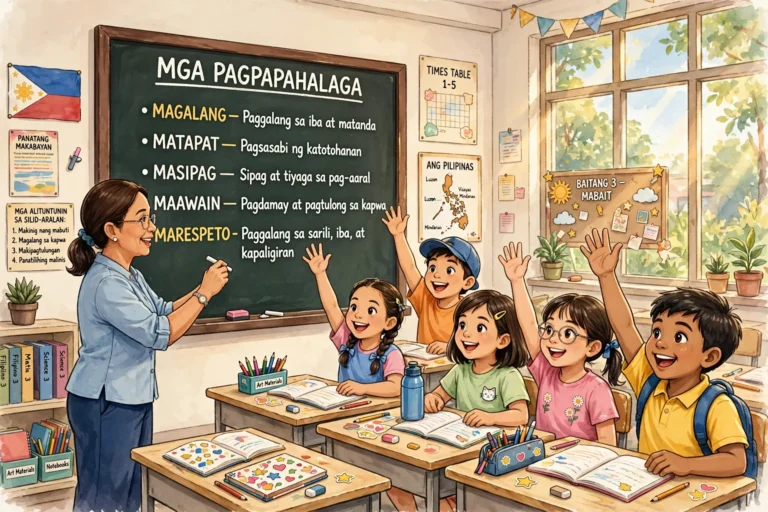
- Filipino and English are the primary media from Kindergarten to Grade 3 under the MATATAG medium of teaching and learning. Full stop.
- Regional languages serve as auxiliary media under the MATATAG medium of teaching and learning — mainly through translanguaging. That’s the academic word for switching languages on purpose to help kids understand. We’ll dig into this, because it’s the most misunderstood part of the whole policy.
- Filipino Sign Language is the MATATAG medium of teaching and learning for deaf and hard-of-hearing learners. Not a suggestion. The medium.
- It rescinds the Key Stage 1 language provisions of DepEd Order 010, s. 2024. The old rules? Officially dead.
And it covers everyone. Public schools, private schools, state universities running basic ed, even Philippine Schools Overseas. Nobody’s exempt.
Here’s what I appreciated: Angara didn’t pretend the old policy was garbage. He said straight up that mother-tongue instruction showed good results where learners shared one first language — but scaling one approach across a multilingual country proved brutally hard. That’s… unusually honest for a DepEd secretary.
Kinder & Grade 1: Where It Gets Real
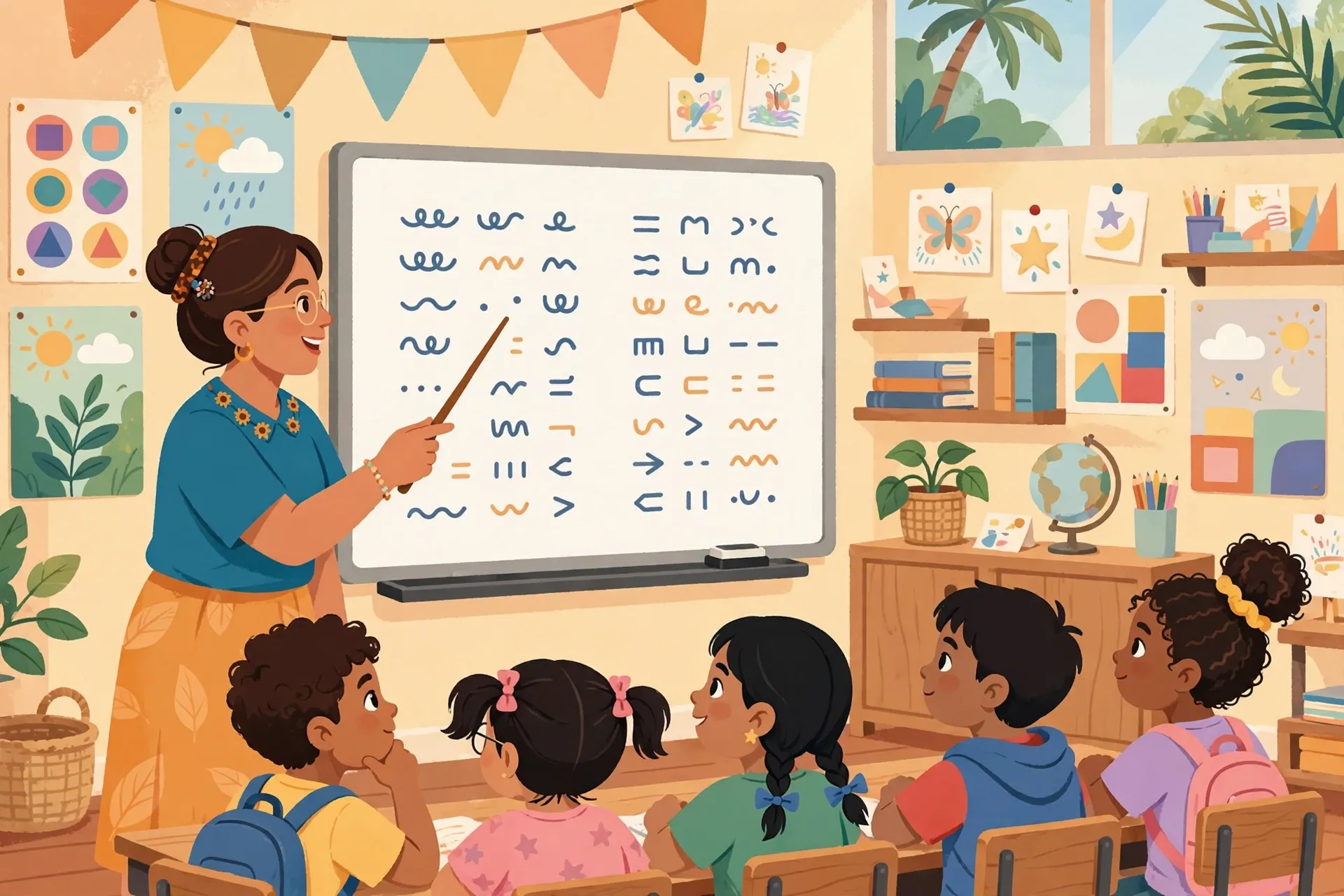
Five-year-olds don’t care about Republic Acts. They care about understanding the teacher.
And most of them show up speaking only their home language. So what do you do?
Under the current MATATAG medium of teaching and learning rules, you teach in Filipino and English. Grade 1 runs five subjects: Language, Reading and Literacy, Mathematics, Makabansa, and GMRC. (For how these fit into the school day, see our guide to MATATAG time allotment per subject.) Early reading still starts the way it always has — speaking and listening first, then letters, then words, then short texts. That part didn’t change.
But here’s what a principal like Mrs. Reyes gets wrong: the home language isn’t banned.
It’s a bridge. A quick Bisaya explanation that saves a confused five-year-old from a meltdown? That’s not a violation. That’s good teaching. The policy explicitly allows it.
Think of it this way: use the bridge to get them across, then keep walking in Filipino or English. Over the year, they’ll need the bridge less and less. That’s the goal — not ripping the bridge out on day one.
Grades 2–3: The Transition Zone
Key Stage 1 covers Kinder to Grade 3 under the MATATAG medium of teaching and learning, and the upper half is where the shift completes. Filipino and English stay the main media. Two things change: English and Filipino split into separate subjects in Grade 2, and the mother-tongue-as-subject era officially ends.
If you teach Grade 2 or 3, you’re in the hardest spot. Your kids might still think in Bisaya or Ilocano while you’re teaching in Filipino. That’s normal. That’s expected. Translanguaging — dropping into the home language to clarify something, then returning to the medium — is your best tool. DepEd names it right there in the order.
Use it without guilt. Seriously. It’s in the policy.
Grades 4–6: No More Ambiguity
By Key Stage 2 of the MATATAG medium of teaching and learning, the training wheels come off. English and Filipino carry every subject. The first language steps back to a pure support role — a quick clarification here, a translated term there.
One thing you’ll notice: the “language of the classroom” and the “language of the playground” fully diverge for a lot of kids now. A Grade 5 learner chatting happily in Filipino at recess but struggling with a science text? Not failing. Mid-transition. Research has always shown conversational fluency arrives way before academic fluency. Give it time.
Grades 7–10: The Academic Push
Key Stage 3 of the MATATAG medium of teaching and learning keeps Filipino and English, but the demands jump hard. Learners now handle literary, informational, academic, and transactional texts. Language isn’t just carrying content anymore — analyzing language is part of the content, especially in English and Filipino subjects.
Medium of Instruction by Grade at a Glance
| Grade Level | Primary Media | Support |
|---|---|---|
| Kindergarten | Filipino & English | Home language as bridge; FSL for deaf learners |
| Grade 1 | Filipino & English | Home language as bridge; FSL for deaf learners |
| Grades 2–3 | Filipino & English | Translanguaging; home language for clarification |
| Grades 4–6 | Filipino & English | First language for support when needed |
| Grades 7–10 | Filipino & English | First language for support when needed |
The Exception Nobody Tells You About
Here’s something most summaries skip: Section 2 of RA 12027 lets certain schools keep using the learner’s language as the medium of instruction — if they meet specific conditions. This includes schools under the Indigenous Peoples Education Program.
But — and this is the part people miss — it’s not automatic. There are requirements. DepEd and the KWF (Komisyon sa Wikang Filipino) are developing a language mapping policy to figure out which schools qualify.
So if your school is in a monolingual community and you think you qualify? Don’t just declare it. Talk to your division office first. The door is open, but there’s paperwork.
What Translanguaging Actually Looks Like (A Real Example)
Okay. Enough theory. Let me show you.
Grade 2, Cebu City. Teacher Marites — a hypothetical teacher — is teaching math. Addition with regrouping. Her lesson is in Filipino, per policy. She writes “labing-anim” on the board. Half the class nods along. A boy in the back? Lost. Completely.
She walks over. Crouches down next to his desk. Quietly, in Bisaya: “Napulo ug unom — sixteen, di ba?”
His face lights up. Got it.
She stands back up, switches to Filipino for the whole class: “So labing-anim plus walo…”
That’s it. That’s translanguaging. Forty-five seconds in Bisaya, and the lesson rolls on in the official medium. No guilt. No violation. Exactly what DepEd Order 020 describes.
Now here’s a pattern: the teachers who struggle with this policy are usually at one of two extremes. The ones who teach entirely in the home language — that’s the old policy, it’s gone, let it go. And the ones who refuse to use the home language at all — that’s not what the order asks either.
The sweet spot is the middle. Filipino and English lead. Home language supports. That’s the whole game.

Scripts That Actually Work (Steal These)
Theory’s nice. But what do you say when a parent corners you after class, or your principal asks why you used Bisaya in a math lesson? Here are lines you can use word-for-word.
When a parent demands English-only:
“I understand — you want the best for your child, and so do I. Here’s what the research shows: kids who understand the lesson in any language learn English faster than kids who sit confused in English-only classes. I’m using both so your child actually learns. The English is there — it’s just not the only tool.”
When your principal questions your Bisaya:
“DepEd Order 020, s. 2025 specifically names translanguaging as the method for auxiliary language support. I’m following the order — Filipino leads, Bisaya supports. Want me to show you the provision?”
When a fellow teacher says the policy is anti-mother-tongue:
“It’s not anti — it’s repositioned. The home language went from main vehicle to support vehicle. Still in the car. Just not driving anymore.”
When a parent asks why there’s no more Mother Tongue subject:
“MATATAG replaced it with dedicated English and Filipino subjects starting Grade 2. Your child gets more language instruction now, not less — it’s just in the two national languages.”
Save these. You’ll use them.
Your First-Week Action Plan
New policy, new school year. Don’t try to overhaul everything on day one. Here’s a sane first week:
Day 1–2: Map your class. Quick survey — what language does each child speak at home? A simple show-of-hands or a slip of paper. You need this data before you can plan anything.
Day 3: Build your word wall. Key terms for the week’s lessons in Filipino/English, with home-language translations beside them. Takes an hour. (Our sample class program for MATATAG shows where it fits in the day.) Kids will reference it themselves within two weeks — that’s the usual pattern.
Day 4: Try one translanguaging moment. Just one. Pick the hardest concept of the day, explain it briefly in the home language, then continue in the medium. Watch what happens. (Spoiler: the confused faces clear up.)
Day 5: Talk to parents. Send a short note home — or better, catch them at pickup — explaining why you’re using two languages. Parents who understand the method stop demanding English-only. Most of them just never had it explained.
That’s it. One week. You’re not “implementing a language policy” — you’re just teaching, with one extra tool.
Mistakes I Keep Seeing (Don’t Be These Schools)
Treating “auxiliary” as “banned.” Imagine a school where a teacher gets called out for one Bisaya sentence. One! That’s not policy enforcement, that’s a misreading. Auxiliary means supporting. The order literally names translanguaging as the method. Support is the job.
Assuming the exception is automatic. The monolingual-school option under RA 12027 has conditions attached. Schools that just declare themselves exempt without meeting them? Exposed. Do the paperwork.
Forgetting FSL entirely. Filipino Sign Language for deaf and hard-of-hearing learners isn’t a footnote in the order — it’s a requirement. If your school has deaf learners, “we’ll get to it” isn’t compliance.
Running a purity test. Nothing — nothing — in the policy says math must be 100% Filipino with zero English terms. Bilingual flexibility inside a lesson is normal and healthy. The policy sets the primary media. It’s not a purity test.
The Hard Parts (Let’s Be Honest)
I’d be lying if I said this was easy.
Multilingual classrooms are genuinely hard to teach in. You might have three home languages in one room. Materials in the “right” language don’t always exist — sometimes you’re translating on the fly. Parents sometimes demand English-only because they genuinely believe it’s better for their kids (it’s not — the research is clear that understanding comes first, language second — but try telling that to an anxious parent at 6pm).
And then there’s you. Most teachers weren’t trained for this. If you taught under MTB-MLE for a decade and someone tells you to flip overnight? That’s whiplash. Give yourself grace. The policy changed in a day. Your practice gets to catch up gradually.
Find one colleague doing it well and watch them teach. Seriously — one observation is worth ten seminars.

Practical Tips That Actually Work
- Preview in the home language, teach in the medium. Two minutes of Bisaya preview before the Filipino lesson. Comprehension doubles. Not kidding.
- Build that word wall. (See Day 3 above.) Two languages side by side. Kids use it on their own fast.
- Let learners answer in any language, then recast. Kid answers in Ilocano? Great. Repeat their answer back in Filipino. They learn the mapping without being silenced. Everybody wins.
- Watch for the KWF language mapping. DepEd and KWF are building official guidance on which languages fit where. When it drops, read it.
- Talk to parents early and often. Explained above. Worth repeating because it solves half your problems before they start.
- Record yourself once. One lesson. Listen back. Count how many times you switched languages and why. You’ll spot patterns — and bad habits — you’d never notice live.
A Note for Parents Reading This
Keep speaking your home language at home. Seriously. Don’t switch to broken English because you think it helps — it doesn’t.
The research on this is unambiguous: a strong first language makes second and third languages easier, not harder. Read to your kids in whatever language you’re comfortable in. Talk about their school day. Ask what new Filipino or English words they learned.
You’re not competing with the school’s languages. You’re building the foundation they stand on.
Frequently Asked Questions
Which law changed the mother-tongue rule?
RA 12027, which lapsed into law in October 2024, ended mother tongue as the mandatory medium for K–3. DepEd Order 020, s. 2025 (signed July 3, 2025) put it into practice in classrooms.
So can I still use Bisaya/Cebuano/Ilocano in class?
Yes — as a support tool. Explain a hard concept briefly in the home language, then continue in Filipino or English. That’s translanguaging, and it’s explicitly in the policy. What you can’t do anymore is teach the whole lesson in the mother tongue.
What is translanguaging, exactly?
Using all of a learner’s languages strategically to build understanding. Not random code-switching — strategic switching with a purpose.
What language do Grades 4–10 use?
English and Filipino, with the first language supporting when needed.
Is Mother Tongue still a subject?
No. MATATAG removed it as a separate subject. English and Filipino take its place from Grade 2 onward.
Can our school still teach in the mother tongue?
Possibly. RA 12027 Section 2 allows it for schools meeting specific conditions, including IPED schools. But it’s not automatic — check with your division office.
What about deaf learners?
Filipino Sign Language is their medium of instruction under the order. Schools are required to provide it.
My principal says no home language at all. What do I do?
Show them DepEd Order 020, s. 2025 — translanguaging is named in the policy as the auxiliary method. “Auxiliary” means supporting, not banned. If they still push back, that’s a conversation for your division office.
Where can I read the official rules?
DepEd Order 020, s. 2025 and DepEd Order 010, s. 2024 on DepEd’s official website, plus the official MATATAG FAQ document. Always go to the source: deped.gov.ph.
The Bottom Line
Here’s the whole MATATAG medium of teaching and learning policy in one sentence: Filipino and English lead, home language supports.
But policies don’t teach. You do.
And the teachers who get this right aren’t the ones with perfect Filipino or flawless English. They’re the ones who read the room. Who notice the lost face in the back row. Who use every language their kids bring through the door and never let a language rule get in the way of a child understanding something.
Keep the bridge. Teach in the medium. And when in doubt, ask yourself one question: did they get it?
That’s the only test that matters.
Sources & References
- DepEd Order No. 020, s. 2025 — Policy on the Medium of Instruction for Kindergarten to Grade 3 (July 3, 2025)
- DepEd Order No. 010, s. 2024 — Policy Guidelines on the Implementation of the MATATAG Curriculum
- Republic Act No. 12027 — discontinuing mother tongue as medium of instruction, K to Grade 3 (lapsed into law, October 2024)
- Republic Act No. 10533 — Enhanced Basic Education Act of 2013 (MTB-MLE)
- PhilSTAR Life — Kinder to Grade 3 students to be taught in Filipino and English
- GMA News — Filipino, English primary mode of instruction in K–3
- PIDS — Policy brief on mother tongue as medium of instruction
- DepEd — Official FAQs on the MATATAG Curriculum
How to Cite This Article
MATATAG Curriculums. (2026, October 3, 2026). What is the Medium of Teaching and Learning in the MATATAG Curriculum?. Retrieved from https://matatagcurriculums.com/matatag-medium-of-teaching-and-learning/